By Marcus Coetzee, May 2026
[Click here to download a formatted PDF with white text on a black background.]
Scotland was once an industrial giant – a world leader in shipbuilding, steel, textiles, chemicals and locomotives. Now the manufacturing industry contributes less than 10% of its economy. This longform essay asks where that industry went, why it went, and whether it can ever return. Written by a South African-born strategy and economic development consultant with thirty years of experience across Africa and the UK, it brings a perspective that domestic commentators cannot offer: what does Scotland’s deindustrialisation look like to someone who has spent their career watching African countries desperately try to build the industrial base that Scotland built and then abandoned? The answer is both illuminating and uncomfortable.
Executive Summary
Scotland’s industrial decline is one of the most significant and least honestly examined economic stories of the past two centuries. This essay traces that decline from the beginning of the Industrial Revolution in the 1750s to the present day, drawing on the histories of ten industries that were once world-leading and are now mostly gone. It also draws on thirty years of the author’s strategy and economic development work in Africa to offer a comparative perspective that is largely absent from domestic policy debate.
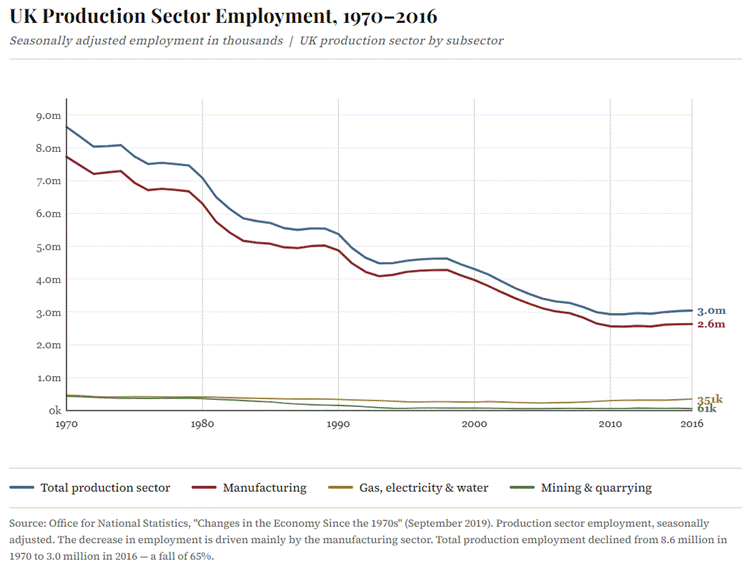
To set the scene, industrial activity has declined rapidly across Britain, and Scotland is no exception. The contribution of the production sector to UK economic output shrank from around 30% in 1970 to around 10% by 2016, while services grew from 56% to 80% over the same period. Employment in the UK’s broader production sector fell from 8.6 million people in 1970 to 3 million by 2016, a loss of more than 5.5 million jobs.
Scotland’s broader production sector currently accounts for around 16% of economic output, slightly higher than the UK average, but this is largely explained by North Sea oil and gas, rather than manufacturing, which accounts for around 10% of Scottish economic output. As North Sea oil and gas continue to decline, Scotland’s apparent industrial activity will shrink further, exposing the underlying weakness of its diminished manufacturing base. This recent acceleration in Britain’s industrial decline has taken less than 50 years.
The essay reaches ten key findings.
First, Scotland’s industrial system was not a collection of parallel industries but a deeply interconnected ecosystem of energy, transport and production that co-evolved over centuries. Coal powered the steel industry and generated power. Steel was used to build ships and locomotives. Railways enabled steam locomotives to move huge quantities of coal, iron ore and other raw materials. Canals and deepened rivers carried inputs to factories and goods to port. When one element collapsed, it pulled the others with it. This interconnection also explains why deindustrialisation was so total and so difficult to reverse.
Second, Scotland’s industrial decline did not happen in a single event but in six distinct waves between the 1820s and the present day. Each wave had different causes and affected different industries at different times. Collapsing everything into a single Thatcher-era narrative, as popular history tends to do, obscures the structural forces that preceded and followed it, and which largely remain to this day.
Third, many of the industries that collapsed did so because they failed to progress sufficiently along the value chain, leaving them vulnerable to cheaper overseas competition. Those that survived, such as the whisky industry, did so by moving upmarket, securing their input supply chains, and building defensible brand value. The lesson is clear: industries that compete on cost alone will always eventually lose countries that have an abundant supply of semi-skilled labour.
Fourth, Scotland’s deindustrialisation was substantially a matter of political choice rather than economic inevitability. Germany, Japan, South Korea and Switzerland all faced the same globalisation pressures and chose to protect and develop their industrial bases through active state intervention, patient capital, tariff protection and vocational education. Britain chose free market orthodoxy instead. The outcomes speak for themselves. They have sophisticated manufacturing industries and Britain doesn’t.
Fifth, three underlying ideologies have driven British industrial policy for decades and persist today: the laissez-faire belief that markets should determine industrial outcomes without state intervention; an evolutionary theory of economies that frames services as a more advanced form of economic activity than manufacturing; and an unconscious association of industry with the environmental and social horrors of the Victorian era. Until these ideologies are honestly examined and challenged, any industrial strategy will be unconsciously undermined from within.
Sixth, the UK’s extremely high industrial electricity prices, among the highest in the developed world, and approximately four times those of the United States, represent not a headwind but a wall for industrial development. Combined with net zero carbon accounting that measures only territorial emissions, current energy policy effectively exports carbon-intensive industry to other countries while counting the departure as an environmental success. Port Talbot’s steel closure is the most visible recent example of this phenomenon.
Seventh, the replacement economy consisting of services, tourism, green energy cannot substitute for industrial employment at scale. Many service sector jobs are more mobile than the factories they replaced, as evidenced by the rapid offshoring of call centres, legal processing, IT services and financial back-office functions to countries like South Africa and India. A government that dismantled its manufacturing base on the assumption that services would replace it could not have anticipated that services would prove even more footloose than factories.
Eighth, Scotland’s devolved settlement fundamentally constrains its ability to pursue an independent industrial strategy. The macro levers that matter most such as currency, tariffs, trade policy and energy pricing are all determined at Westminster. Scotland can write industrial strategies, but it cannot implement the most important tools those strategies require.
Ninth, both Scotland’s Green Industrial Strategy and the UK’s Modern Industrial Strategy are inadequate responses to the challenge. Scotland’s strategy is clearly written and values-based, but narrow in its industrial outlook, focused almost entirely on green industry while overlooking the competitive threat from China, which dominates green technology manufacturing. In contrast, the UK strategy is a broad wish list containing at least six irreconcilable internal contradictions. The UK strategy demonstrates neither the prioritisation nor the political commitment that characterises the industrial strategies of countries that have actually succeeded. Scotland’s strategy is focused and committed, but the focus is too narrow and the competitive assumptions too optimistic.
Tenth, and most fundamentally, the contrast with industrialising Africa makes Scotland’s complacency visible in a way that is difficult to see from within. African countries are desperately trying to move along their value chains, building the industrial base that Scotland built over centuries and then was allowed to unravel over 50 years. The endpoint – a population without sufficient productive industrial employment – looks remarkably similar whether it results from never having industrialised or from having industrialised and then retreated. Scotland has forgotten the value of what it lost. Africa has never had the luxury of forgetting and wants what Scotland had.
The essay concludes that a significant revival of Scottish industry is unlikely without a fundamental shift in political will and policy framework at the UK level. The factors that caused deindustrialisation have not been resolved. They persist, and they will continue to undermine both existing industries and any attempts to build new ones. The future will provide difficult lessons. The only question is whether policymakers will be willing to learn them.
Table of contents
- Executive summary
- Introduction
- The concept of industry
- Scope and magnitude of Scottish industry
- Social and environmental consequences of industrialisation
- Timeline for the disappearance of Scottish industry
- Why did Scottish industry disappear?
- Consequences of deindustrialisation
- Likelihood of Scottish industry returning
- Discussion
- Conclusion
1. Introduction
Alongside the Loch Ness Monster, the disappearance of several great industries is one of Scotland’s most intriguing mysteries. This mystery has puzzled me since I moved to Scotland in 2021. I did not expect this long-form essay to emerge from my investigations, nor did I expect it to reach around 25,000 words. Neither did I expect that the factors behind Scotland’s industrial decline over the past two centuries are still in play today, still undermining any attempts to revitalise industry.
Scotland was an industrial giant during the Industrial Revolution and the early 20th century, but now manufacturing contributes only one-tenth of Scotland’s economic output. The Scottish economy is now built on whisky, hospitality, tourism and other services. Attempts to revitalise industry are focused narrowly on the green economy, and other industrial activities seem to be viewed with suspicion.
Whenever I visit towns and villages throughout Scotland, or deal with third-sector organisations trying to revitalise them, I’m always struck by the industrial history of the place. I’m often told something like, “This village was renowned for making X” or “There used to be a massive Y industry in this town.” So much of the identity of places in Scotland is nostalgically centred on the past. People often tell me, with a sense of pride, how their parents, grandparents, or ancestors used to work in a certain industry, which sadly collapsed.
I have the same experience in Paisley, where I live. I have heard hundreds of stories about the textile industry in the town, and about the shipbuilding industry along the Clyde. These industry remnants are tangible and everywhere – in ruins, in heritage centres and museums, in refurbished buildings, in old photos and documentaries, at town festivals, and most often, in stories. There is also that hint of nostalgia or sadness for what has passed, talk of the “good old days” or “how things were” or how vibrant the town centre used to be.
Even though people intellectually applaud the decision to move away from some dangerous and polluting industrial activity, there is still this sense of nostalgia. I’ve even heard former coal miners reminisce about the close bonds and shared experiences they felt with their fellow miners – similar types of stories to those I’ve heard from people who served in the military.
This is a very different feeling from my work in economic development in Africa, in those countries stable enough to focus on their economies. Despite widespread levels of poverty relative to Scotland, there is still a tangible and stubborn sense of hope for the future in countries like South Africa, Kenya and Zambia, and that things will improve, if not for them, then at least for their children. There is a youthful economic vibrancy that is difficult to ignore, and is visible everywhere from street traders through to new highways and bridges being built. Infrastructure is developing faster than it is degrading. Hope persists despite poverty.
From an African perspective, an economy must be built on real tangible stuff – raw materials and the things made from them. This can be stuff grown, mined or raised, or manufactured and processed goods. Even the lady with a cauldron on the side of the road who is preparing a wood fire to cook a stew for lunch is making valuable food that fuels the economy. Things like railways and electricity enable tangible items to be made and transported. This is real. It can be touched, felt and weighed. Every sensible business knows the importance of adding more economic value to raw materials, and ideally, finding a way to export them to bring in foreign currency. Services are valued, but they are seen as supplementary to this economic foundation – and services can vanish at a moment’s notice.
Continuing from an African perspective, it seems foolish and negligent for Britain to develop a strong industrial economy that catapults a nation to its modern wealth, and then to simply let this foundation unravel, to be replaced with intangible services. While this may happen in war-torn countries or when short-sighted dictators take the reins of a country like in Zimbabwe, it is not something that any good leader would ever let happen in peacetime. That’s the specific Scottish and British pathology, and Africa has never had the luxury of self-deception. Industry helps employ people and pay taxes. It helps countries become less vulnerable and more resilient. Vibrant and widespread industry is desirable.
So, back to my original mystery. Where did Scotland’s industry go?
I’ve spoken with colleagues and development economists about Scotland’s economic history to make sense of this and discovered it’s a controversial topic with various ideological perspectives. Some celebrate its demise, seeing it as a relic of the past, a critical but primitive stage in the evolution towards a modern Scottish economy. Others consider the abandonment of industry as reckless, with severe economic consequences and something to mourn. Both groups are sentimental about Scotland’s past industrial successes, as am I after researching and writing this essay.
The following chapters of this essay provide a definition of industry and describe the importance of adding economic value to goods through manufacturing and processing. It then explores a sample of ten Scottish industries which were internationally renowned and have mostly declined or fallen away, with the exception of whisky. I reflect on how this pathway of economic development is almost opposite to what Africa is aspiring towards. I acknowledge the negative impacts of the Industrial and Agricultural Revolutions while also providing counter-examples of how some developed countries have successfully protected and developed their industries, and how these run with ethical labour and environmental standards.
I go on to explore the consequences of industrialisation in Scotland and across Britain, and reflect on the trends and other factors that led to this state. Surprisingly, many of these factors were under the control of the British government and still persist. Finally, I reflect on the likelihood that Britain will ever be able to revitalise its industrial base, reviewing Scotland and the UK’s industrial strategies. Sadly, I conclude that this is unlikely, unless there is a significant multi-party shift in mindset and policy.
2. The concept of industry
Let me start with some foundational ideas and build up from there. I’ll try to explain this as simply as possible. This will help to make sense of the remainder of the essay.
Broadly speaking, I will use the term “industry” as a collective noun with its traditional meaning, referring to a cluster of businesses involved in producing, extracting or making a similar or related set of goods for local and export markets. I chose to use the term “industry” to convey a feeling of machinery, grease and practical ingenuity rather than just an economic sector.
This essay won’t focus on the services sector, which dominates the Scottish economy. I acknowledge that services help to grow industry, and that growing industry requires services.
Scotland used to have several large-scale industries, built by famous (and infamous) industrialists. Consider the shipbuilding industry that existed around Glasgow. This industry included all the ship manufacturers, suppliers, investors, trade unions, industry associations and specialised training institutions intrinsically associated with it. The shipbuilding industry is a subset of the UK’s broader manufacturing sector, which in turn is part of the UK’s economy.
A similar principle applies to Scotland’s whisky industry, which is also part of the UK’s manufacturing sector and broader economy. The whisky industry also contributes to both the hospitality and tourism sectors. Industries are defined by what is produced and not how the goods are ultimately consumed.
Before moving on to the great Scottish industries of the past, there are four foundational concepts worth introducing: the difference between manufacturing and processing; how value chains work; how economic value increases along the value chain; and the challenges involved in picking which industries to support. That last point is less straightforward than you might imagine.
2.1. Manufacturing versus processing
At the core of every industry are activities that transform raw materials and other material inputs into more economically valuable objects. These activities manufacture and/or process these goods.
“Manufacturing” refers to combining components into an object or machine, which could theoretically be disassembled into its original components. For example, a shipbreaking yard can disassemble a ship and recycle or dispose of its parts.
In contrast, “processing” refers to transforming a material item, often through chemical processes, and in a way that the final product can’t be disassembled. For example, I can’t take a bottle of fine whisky and disassemble it into its original grain, yeast and water, though I can recycle the glass bottle.
Manufacturing and processing activities tend to be intertwined. Consider the thick electrical cables used on ships. These are manufactured from processed copper twined into cable and given processed plastic or rubber protective shells.
2.2. Value chains of activity
The process for creating goods in an industry follows what we call a “value chain” – a sequence of activities and technologies that act upon, and transform, a physical good into something else, and move it from one stage or place to another.
To help illustrate this concept, here is a common value chain for cheese processing:
Dairy farmers raise and milk cows (production) -> milk is stored, chilled and transported -> milk is pasteurised for most cheeses and put into containers (primary processing) -> milk is transported -> milk is made into cheese and stored in special conditions to mature (secondary processing) -> cheese is transported -> cheese is sold to retailers, consumers and other processors -> cheese is baked into scones or put on toasties (tertiary processing) -> final products are consumed, and hopefully enjoyed.
In this example, I’ve identified the three stages of processing: primary, secondary and tertiary. I’ve used an example of an agricultural product, but the same concept applies to manufacturing items such as cars, furniture or clothing.
2.3. Economic complexity and value develop along the value chain
The economic complexity of an item increases with each additional stage of processing or manufacturing. This is because additional inputs, sophisticated machinery, skills, certifications, and other processes are involved. These are often expensive.
Consider the complexity of all the components and activities that go into making a motor car versus a loaf of bread. I could conceivably produce all the ingredients and tools needed to make a loaf of bread myself, but I certainly couldn’t make a car myself. That is a much more complex and expensive affair. The economic value (and therefore price) of a car is greater than that of a loaf of bread.
Economic development projects often help a country to shift certain industries along the value chain. For example, I dealt with a business in Kenya that moved from buying groundnuts and selling roasted peanuts to making its own peanut butter, and another business moved from selling grain to making animal feed. These might seem like small agricultural processors, but they often had tens of thousands of farmers in their supply chains and served thousands of customers. Some of them also achieved ethical certifications and accessed profitable markets like the European Union. The benefits are immense at scale.
A similar process took place in Scotland when iron ore was processed into steel, which was manufactured into machines, steel plating and other steel products, and used to build ships along the Clyde. The further along the value chain the industry matures, the more local economic value is added, and the greater the benefits for the economy. This is why the British government used policies, subsidies and infrastructure to help grow Scotland’s shipbuilding industry across the 18th and 19th centuries, though growth was driven by a mix of state policy, naval demand, imperial trade, and private investment.
Many businesses can use a strategy called vertical integration to achieve this shift. This involves either starting, investing in, or acquiring a business that is alongside it in the value chain. For example, a salmon fish farm might invest in a business to smoke and package its salmon, as opposed to simply freezing it. It might also invest in a business that creates tinned salmon or a range of fish pastes and fermented sauces. Vertical integration also works the other way around. For example, if a fish processor was struggling to secure a steady supply of affordable fish, they might choose to invest in a fish farm to get preferential access to fish.
Returning to our Clyde shipbuilding example, there was substantial vertical integration to the supply side of their value chain as shipping companies invested in shipyards, which in turn invested in businesses that manufactured the components they needed to make ships. There was also vertical integration to the “right” of the value chain. A good example is the shipyards that invested in the shipping companies that bought the ships they produced.
The countries that actively help their industries expand and progress along their value chains are trying to unlock a variety of benefits for their economy. First, their interventions can improve all types of employment. This puts money in the hands of people to spend and invest, and skilled people inject more money into the economy and pay more tax. Second, it helps businesses to grow and make profits, another valuable source of tax income for the government. Third, it improves national resilience as a country is more self-sufficient and able to bring in foreign currency through exports. Countries that produce goods locally are also less impacted by international shortages or trade disruptions. Unfortunately, the UK is a net importer of essential goods like food, gas, fuel and steel, which makes it vulnerable to such disruptions.
Finally, the local industry provides inputs for the manufacture and processing of other local goods. This creates clusters of economic activity and capability, producing a virtuous cycle where different types of businesses produce items that they each consume, and skillsets are largely compatible, a common setup in several of Scotland’s large historical industries.
2.4. Selection of industries to advance
Countries generally strive to have as much of the primary, secondary and tertiary manufacturing or processing taking place within national borders, to the extent that it makes business sense, since this enables the economy to accrue more economic benefits.
There are two key selection challenges to overcome. The first is to identify which industries to support, and the second, to identify which stages in these value chains to support.
To address the first challenge, governments typically aim to identify and actively nurture industries that have an international competitive advantage over similar industries in other countries – i.e an industry that can reliably produce sufficient quantities of affordable quality products, and where the market is sufficiently large to enable the industry to scale. Such industries should preferably also be able to absorb large amounts of local semi-skilled and skilled labour, have dense local supply chains, and make goods that are also locally consumed. The latter makes a more resilient economy.
This competitive advantage depends on geographical factors such as the availability of suitably priced raw materials and other inputs. It also considers historical economic activities and preferences, especially those embedded in the culture. Competitive advantage also considers factors like the potential availability of skilled labour and overlapping industries and supply chains. The relative currency values are also significant since it is better to produce goods more cheaply than one’s competitors, especially if there are limited trade protections like import tariffs, and if the industry intends to export.
Scotland has chosen to focus on developing its green industry. It intends to maximise Scotland’s wind economy, improve carbon capture and energy storage, support green services, strengthen the hydrogen sector and establish Scotland as a centre for clean-energy-intensive industries of the future.
Strengthening these industries involves an array of interventions such as developing the infrastructure, providing investment, removing policy obstacles, using tariffs and subsidies appropriately to protect the emerging industry, and improving the availability of suitably skilled workers. The challenge for Scotland is that much of these instruments are deployed at the UK level and not that of a devolved government.
The second challenge is also complex since there are often competing factions. For example, my brother-in-law manages an engineering firm that makes items out of steel for other businesses. One of his ongoing gripes is that South Africa’s steel industry, which extracts and processes the country’s vast iron ore reserves, is unreliable and expensive compared to what he would be able to import, if the government wasn’t protecting that industry. He feels that his businesses export competitiveness would be significantly improved if they had cheaper and more reliable inputs.
But at the same time, the South African government provides up to 52% tariffs to protect types of imported steel from countries like China and Thailand. This is because iron mining and primary processing of steel provide employment to approximately 200,000 workers who belong to strong politically-connected trade unions. So the dilemma here is which industry to protect – South Africa’s mining and primary processing of steel versus South Africa’s manufacturing sector. Hence, the need for complicated trade-offs.
Scotland also has similar trade-offs nowadays. Continuing with its green industry example, to what extent should Scotland use Chinese products such as batteries, solar panels and wind turbines to generate green electricity which can be exported across the border, or under the sea, or should Scotland rather lobby for tariffs against renewable energy products from China and then develop a competing industry. The big challenge is that China is benefiting from a high level of hands-on state support and has achieved economies-of-scale and developed an extensive global supply chain reaching into Africa and other developing countries. The compromise most likely involves utilising Chinese inputs while simultaneously developing its own green manufacturing industry.
There’s one final point I’d like to raise. Wealthy countries have traditionally encouraged a particular dynamic with resource-rich developing countries. They use their bargaining power and promises of international aid to extract raw materials (e.g. minerals, crude oil, agricultural commodities) and primary processed items (e.g. steel or cocoa) from these developing countries, and then sell finished products back to them.
Take critical minerals, for example. China has made significant inroads into securing the supplies it needs for its own economy from Africa. It has secured supplies of cobalt, lithium, nickel, copper and rare earth elements. It has achieved this through promising developing aid, loans and infrastructure. (An anecdote: I remember asking a taxi driver in Nairobi about all the Chinese construction workers building the road we were travelling on. He replied, “…of course there’s corruption, but at least we get the road at the end of day.”) China is thinking long-term about entire value chains instead of just the end product, and being proactive about securing the rights to minerals that it will inevitably need for its economy and its green industry, has predictably made Western countries very worried about their strategic vulnerability. From a strategic perspective, I can’t help but admire China’s approach to growing future industries, even though the West is being outplayed in several areas.
3. Scope and magnitude of Scottish industry
I’m always curious about the economic history of the areas I visit in Scotland for work or as a local tourist during holidays and weekend drives. I visit museums and heritage centres, ask people about it, or check out the Wikipedia page. My wife loves watching historical documentaries about Britain, and some have been very interesting and informative. Scotland was clearly a world leader in several significant industries, and these contributed heavily to employment and tax revenue.
Scotland’s industrial development began around the 1760s, when mass adoption of new technologies started transforming the economy and society. Machines, factories, steam power, and industries like mining, steel and textiles characterised this first wave. The Second Industrial Revolution, sometimes called the Technological Revolution, began in the 1870s, as more advanced technologies emerged and powers like Britain, the United States and Germany ascended as industrial giants. This second revolution ended around the time of World War 1 in 1914, a key inflexion point I return to later. Some Scottish industries continued growing steadily after that until their sharp decline in the 1970s and 1980s. As this chapter will show, the decline of Scotland’s industrial fortunes has accelerated rapidly over the past 50 years, taking a heavy toll on employment.
When discussing Scottish industry, it is impossible to separate it from two other systems: energy production and transport infrastructure. Industry, energy and transport co-evolved in Scotland over roughly 150 years. Each system made the others more productive and more valuable. Coal powered the furnaces that made the steel that built the ships and the locomotives. The railways moved the coal that fed the factories. The canals and deepened rivers carried goods to port. When one system went into decline, it pulled the others with it. The same three interlocking systems that built Scottish industry ultimately declined together.
This interconnection is also worth bearing in mind when thinking about reindustrialisation. South Africa and other developing countries are currently struggling to build all three systems simultaneously, something which took Scotland over 150 years to do. The task is not simply to build factories but to build the entire ecosystem that makes factories viable.
3.1. Where industry stands today
To give context to the subsequent discussions in this essay, I’d like to share some official statistics, and provide a high-level breakdown of Scotland’s current economic output, and show how Britain’s industrial sector has declined significantly since the 1970s, along with the millions of people who were previously employed in this industry.
3.1.1. Current economic output of the Scottish economy
The Scottish economy is divided into four broad sectors, an approach used internationally. According to the Scottish Government’s GDP First Quarterly Estimate for 2024 Quarter 4, published in February 2025, the breakdown of Scotland’s economic output using 2019 as the base year is as follows: services at 77%, production at 16%, construction at 6%, and agriculture, forestry and fishing at 2%.
By October 2024, the Scottish Government’s Chief Economist reported that services had grown to account for nearly 80% of Scottish economic output, with the production sector continuing to contract.
The production sector is itself subdivided into manufacturing (10% of total Scottish economic output), electricity and gas supply (3%), and mining and quarrying (1%).
The bar graph below illustrates the different sectors, constructed from this data. Note that the production bar is subdivided into the lightly shaded bars.
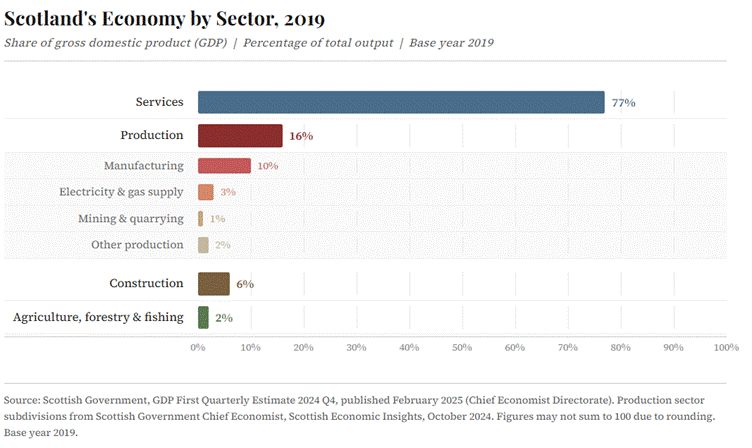
Manufacturing sits at the centre of my discussion on Scotland’s industrial decline. The other sectors (i.e. agriculture, forestry and fishing, electricity and gas supply, and mining and quarrying) are mostly involved in primary production and extraction rather than the more sophisticated types of manufacturing and processing that Scotland needs more of.
Together, production and agriculture, forestry and fishing broadly describe what I’ve been calling industry throughout this essay, though electricity and gas supply within the production sector refers largely to energy generation rather than manufacturing.
3.1.2. Over time decline in production and manufacturing
The ONS’s article on the “Changes in the Economy Since the 1970s”, published in September 2019 and available at ons.gov.uk, provided the data I used to create the following graph which displays how the UK economy has shifted.
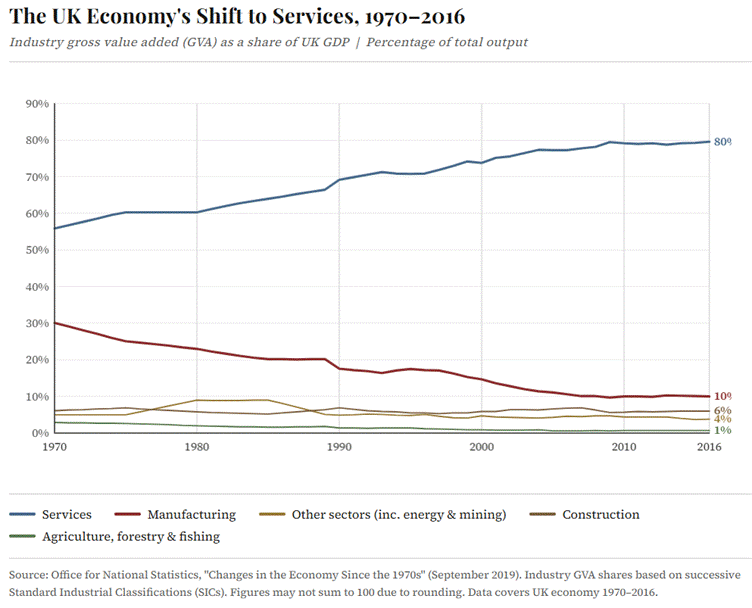
In 1970, services accounted for 56% of UK economic output, and production for 30%. By 2016, services had grown to 80% while manufacturing had fallen to 10%. This reversal took less than 50 years.
3.1.3. Decline in production sector employment
According to an ONS article titled “Changes in the Economy Since the 1970s”, published in September 2019 and available at ons.gov.uk, employment in the UK production sector declined from 8.6 million in 1970 to 3.0 million in 2016, a fall of more than 5.5 million jobs. The decline has continued since. The article also notes that this decrease was driven mainly by the manufacturing sector. I constructed the following graph using data provided by this ONS report.
3.2 Energy production in Scotland
Industry requires huge volumes of affordable and reliable power to drive machinery, transform materials, and move goods.
In the early stages of the Industrial Revolution, Scotland relied primarily on water mills to power intricate sets of cogs and pulleys for machines such as saws, lathes, grindstones, pumps, and threshers. Watermills were much more commonplace than windmills. Scotland had more than 10,000 active watermills during the late 18th and early 19th centuries.
I’ve been genuinely amazed by some of the old mills I’ve visited along various rivers, from ruins to World Heritage Sites like New Lanark. I hadn’t anticipated how extensively water power had been used to drive machinery. More recently, I worked with a traditional craftsman repairing an old mill that used to make wooden buckets, and learned a great deal more about the relevance of watermills to Scottish industry.
The onset of steam power, heated by wood and coal furnaces, emerged rapidly after the 1830s and made watermills almost obsolete by the 1880s. Factories tended to run hybrid systems during this intermediary period, relying on both forms of power, depending on river conditions.
From about 1900 to 1920, electricity took over as the primary source for factories and machinery. This electricity was primarily generated through petrol- and diesel-powered machines, and by coal-powered stations that supplied the grid. Gas-powered turbines then replaced coal power stations in the 1990s. Wind power is nowadays frequently the largest source when there are high winds throughout Britain, complemented largely by gas-powered turbines.
Scotland has shifted energy modes since the Industrial Revolution started, moving from watermills to coal and steam, to electricity powered by coal, then gas and now also wind. Unfortunately, the UK now has some of the most expensive commercial electricity prices in the world, significantly inhibiting the viability of many manufacturing and processing industries. I explore this in my essay about the UK’s energy policies.
3.3 Transport infrastructure in Scotland
Transport infrastructure is integral to industrial development and Scotland’s industrial revolution. It is not a peripheral feature. Transport functions like the circulatory system of a living body economy.
Scotland’s geographical layout provided a network of lochs and rivers to travel along, and a jagged coastline with many inlets to find safe harbour, interspersed with islands, making it easier to jump along the coast. This provided a transport network for traders and merchants, well before the industrial revolution, exponentially increasing the scale of activity.
In the late 1700s, selected rivers were widened, deepened and connected into canals, joined with locks which served as lifts or elevators, and managed the variable water levels.
For example, the Forth and Clyde Canal, opened in 1790, effectively connects Edinburgh with Glasgow with a 35-mile route in the Central Belt of Scotland. This canal joins the Clyde in Bowling, which I can attest is a nice area for walking and birdwatching. In another example, the Caledonian Canal travels 60 miles between Inverness and Fort William, diagonally across Scotland, joining Loch Ness, Loch Oich, and Loch Lochy.
Scotland’s five main canals, with a combined distance of 141 linear miles, enabled barges carrying large volumes of heavy equipment, raw materials, supplies and finished goods to be transported around the country. This connected industry, raw materials and markets. The heyday of the canals was between approximately 1800 and 1840, after which the railway network grew exponentially across Scotland and mostly replaced canals for commercial traffic by 1900.
The expansion of the railway system in the early 1800s made it much cheaper and quicker to carry huge volumes of raw materials and goods across Britain. This helped build a reinforcing cycle with coal fuelling furnaces and boilers, helping to extract and transport more materials in ships and trains throughout Britain and between other countries, improving industrial production and access to markets, and then enabling more resource extraction. By 1866, there were already over 2,000 miles of railways in Scotland, connecting all major markets and industrial areas.
Shipping activity also significantly improved during this period. Scottish engineers helped develop the steam engines for barges and ships, making it faster to move goods around and trade with other countries. The River Clyde was progressively widened and deepened between the 1770s and the 1930s, transforming a river that one was originally able to walk across at low tide into a river that battleships and ocean liners would travel along to reach Glasgow. This engineering feat was a precondition for the Clyde’s shipbuilding industry, which I’ll discuss shortly. I go for many walks along the Clyde, and regularly travel under the river in the Clyde tunnel and over it on the Erskine Bridge. I always marvel at what has been achieved.
The interconnected systems of transport, industry and energy meant that when Scottish industry collapsed – initially around World War 1 and then again in the 1970s and 1980s – the other systems collapsed with it. Canals, railways and ports fell into disuse, left to decay like relics of a bygone era.
3.4. Key industries in Scotland’s past
The Industrial Revolution took place roughly between the 1750s and the early 1900s. Despite widespread collapse around the time of World War 1, some industries were resilient and continued to flourish until the 1970s and 1980s, when they also collapsed. Now there are only a handful of the original great industries that remain, including Scotland’s whisky industry.
Below is a selection of ten key industries that reveal the patterns of industrial activity, how they developed, and their scale during their heydays.
3.4.1 Shipbuilding
Shipbuilding is the industry which has most defined Scotland globally. At its peak in the early 20th century, around the time of World War 1, the shipyards on the Clyde produced one-fifth of the entire world’s shipping tonnage. The term “Clyde Built” was a badge of quality, recognised internationally. This industry anchored an enormous supply chain with tendrils reaching throughout Scotland.
The Transport Museum in Glasgow (“the Riverside Museum”) is certainly worth visiting if you’re ever in the area. It contains over 600 ship models that the shipbuilding companies used for testing, marketing and display.
During World War 2, German bombers actively targeted Glasgow’s shipbuilding industry because of its strategic importance to the war effort.
Relics and memories of this industry are everywhere in Glasgow and Inverclyde. People tell me about how their parents and grandparents used to work in the shipyards. It feels like an ancestral memory embedded in the genetics of future generations. I feel nostalgic hearing people talk about this shipbuilding. Although some military ships are still being built and repaired on the Clyde, and there’s talk of more investment, I still wish I could travel through time and witness the memory that people talk about.
I often see a group of older enthusiasts sailing their radio-controlled yachts around Barshaw Pond, the type of thing I may do if I’m able to retire someday. They are still building and sailing ships, though on a much smaller scale.
3.4.2 Coal mining
While coal is not technically an industry in itself, it was the foundational energy source for so much of Scottish industry, which is why I included it here. Coal mining primarily took place in Lanarkshire, Fife and Lothian.
Coal provided fuel for the steam boilers that powered machinery, vehicles and ships, and later the turbines that generated electricity. Coal fuelled the furnaces and smelters that processed iron ore and other important minerals, and made the steel required for buildings, railways, equipment and machinery. Coal also warmed schools, hospitals, homes and factories.
Coal mining was such an important part of Scotland’s economy that coal miners and their communities were subject to multiple caricatures. They were depicted as either rugged and resilient models of working-class strength or negatively as primitive and uneducated boors.
The UK government nationalised the coal mining industry in 1947 to reform it and ensure safe working conditions, at which time there were around 77,000 coal miners in Scotland. With the onset of electrical and gas power, coal consumption steadily declined, with Scotland closing its last coal mine in 2002. The importance of coal mining to Scotland’s industrial growth cannot be overstated. The Industrial Revolution would not have happened without it.
3.4.3 Textiles
Scotland’s textile industry emerged in the 18th century with linen processing, and grew rapidly to include cotton, wool and jute. Textile processing was centred in the Scottish Borders and Lanarkshire, and in the towns of Dundee and Paisley.
Much of the weaving industry took place at home, so “homeworking” is not a new phenomenon in Scotland. There were more than 80,000 weavers in Scotland, working with hand looms at home, before factories started to take over textile processing in the 1830s.
I’m proud to live in Paisley, which was a centre of the global textile industry. It was world-renowned for the Paisley pattern, thread manufacture, and for its role in the workers’ rights and women’s suffrage movements.
There were over 5,000 weavers in Paisley by the mid-19th century, which is significant in a town with a population of around 50,000 people at the time. As with shipbuilding, there are signs and memories everywhere, including the Sma Shot Cottages, Anchor Mill and the Sma Shot Day parade. The latter includes the dramatic ceremonial burning of an effigy of a notorious factory owner called the Cork, and is certainly worth witnessing.
3.4.4 Iron and steel
Iron processing, centred in Lanarkshire, was a critical input for Scotland’s industrial economy. It grew in proximity to the coal mines, which powered the smelters and furnaces, and processed ore into steel and other metals.
Blast furnaces transformed iron ore into iron ingots, which were processed further in furnaces to become steel. This industry was largely dependent on imported iron ore from Spain and Sweden after Scotland’s iron ore reserves were largely depleted by the 1880s. Ultimately, both Spain and Sweden realised the value of processing their own ore to generate more local economic value, much like Africa is trying to do today with its raw materials.
Ravenscraig Steelworks in Motherwell, which closed in 1992, was one of the largest integrated steelworks in Europe during the 1970s, directly employing around 6,000 people at its peak. This illustrates the significance of this industry.
3.4.5 Agriculture
Agricultural commodities and products became a significant Scottish industry during the Agricultural Revolution (1690s to 1850s) that accompanied the Industrial Revolution. Even though the vast majority of Scotland is unsuitable for planting crops, there are sufficient grazing areas, though of variable quality, to support sheep and cattle.
New types of machinery helped with ploughing, sowing, planting, harvesting and threshing, and other labour-intensive activities. Steam engines were also used to power heavy agricultural machinery such as the steam-powered threshing mill, introduced in the 1810s.
Breeding technologies enabled new and improved species of livestock to be developed, including cattle (Ayrshire Cattle, Aberdeen Angus and Highland Cattle) and sheep (Scottish Blackface, Cheviot and Border Leicester). These species were more resilient under harsh weather conditions and produced better quality meat, milk, hides and wool for the market. Animal feeds were also improved, as were methods of feeding animals during winter.
The increased production also had unintended consequences. The new machines and technologies reduced the need for farm workers who often lived with their families as tenants on farms. Masses were forcibly evicted during the Lowland Clearances and Highland Clearances, and required to move to larger towns and cities, looking for work, and often needing to live in poverty in slums. This was a terrible and traumatic time for many. Millions of people, not all farm workers, also emigrated to countries like Australia, New Zealand, Canada and the US to build better lives during this time.
3.4.6 Whisky
Whisky processing is almost synonymous with Scotland, and is one of the few large industries that survived and still thrives. This industry was already significant by the 1800s and has grown steadily since, expanding its brand and export market.
Scottish whisky and whisky-related tourism remain strong elements of the Scottish economy. There are currently over 150 whisky distilleries in Scotland. The whisky industry supports over 40,000 jobs, contributes over £5 billion to the Scottish economy each year, and makes up three-quarters of all food and drink exports. There were over 2.7 million visits to Scottish distilleries in 2024, according to the Scotch Whisky Association.
This illustrates the potential impact of an industry that still functions and was not lost by the end of the Industrial Revolution. It also illustrates how production supports local farmers and how the service-based tourism and hospitality sectors function on top of an industrial base.
My wife loved Scottish whisky when we lived in South Africa, and she is predictably overjoyed with this aspect of living in Scotland.
3.4.7 Fishing
Fishing fleets were primarily based at Aberdeen, Fraserburgh and Peterhead on the East Coast, and at several locations along the West Coast, such as Stornoway (Lewis), Tobermory (Mull) and Ullapool. At one point, Peterhead was one of the world’s largest fish markets.
The herring industry, in particular, was vast in the 19th century, employing not just fishermen but also an entire onshore processing and curing workforce, much of it female. I’ve seen estimates of up to 10,000 herring boats and 35,000 people involved in the industry during this time, but these figures are difficult to pin down precisely.
This industry declined with the reduction in herring and other fish stocks due to overfishing and the destruction of seabed habitats. The improved use and efficiency of industrial machinery also meant that fewer boats and workers were required. Then in the 1970s, the industry further suffered after the UK joined the EU, and ship owners were paid to scrap their vessels in the 1990s and early 2000s to reduce the size of the fleets.
The fishing industry continues to some extent through fish farming and restricted coastal fishing. There are over 200 accredited fish farms off the coast of Scotland. One of my gym friends is a marine biologist with an environmental agency and conducts strict inspections of these farms. This value chain supports approximately 10,000 jobs in Scotland.
Compare this to Zambia’s rapidly growing aquaculture industry, with which I’ve done some work. There are over 50,000 people employed in the value chain, supporting the livelihoods of approximately one million Zambians, and producing approximately 100,000 tons of fish each year. To put things into perspective, Zambia is a landlocked country with poor rainfall relative to Scotland, but the government is actively supporting this industry.
3.4.8 Locomotive and railway production
The North British Locomotive Company, based in Springburn in Glasgow, was the largest producer of locomotives and railway equipment in Scotland. Formed in 1903, it employed approximately 5,000 people at its peak, and produced an estimated 27,000 locomotives for domestic use and for export to countries like Africa, South America, India and Australia. It closed in 1962 due to the increased electrification of Scotland’s railways.
A total of 856 locomotives were built for South Africa, according to The Glasgow Story, drawing upon statistics from Glasgow City Council. I remember seeing steam locomotives when I was younger, since they were still operational in the 1970s and 1980s in South Africa.
The value chains for shipbuilding and locomotive and railway production were similar. They reinforced each other and could draw upon a common pool of people and suppliers.
There’s a very impressive beast of a locomotive in the Glasgow Transport Museum that is worth seeing. It’s much bigger than I remember locomotives being when I was younger. I have an unexpected affinity with this particular model since it was manufactured in Glasgow in 1945, exported to South Africa, where it operated for 40 years, and then returned to Glasgow and was placed in the museum.
I’ve encountered model engineering clubs in both Paisley and Edinburgh, and building model steam locomotives seems like a rite of passage, regardless of one’s age. One elderly engineer in Edinburgh told me that his locomotive is a multigenerational project and he’ll need a younger hobbyist to complete it after he passes away. Children love taking rides on carriages pulled by model locomotives at Barshaw Park during the club’s open days.
3.4.9 Explosives and chemicals
Scotland’s chemical industries were primarily based in Ayrshire and Lothian during the Industrial Revolution.
The byproducts from shale and coal extraction provided an early foundation for producing other chemicals and substances used in the agriculture, mining, construction and defence industries. For example, coal tar could be distilled into components used for explosives, fertilisers and pharmaceuticals. This followed circular economy principles and illustrates the interdependency of the various industries.
Nobel Enterprises, established in 1871, was one of Scotland’s biggest and most pioneering chemical industrial operations. It was a world leader in the production of dynamite, ammunition and other explosives. It was based at a 40-hectare site in Ardeer in North Ayrshire, one of the largest explosives factories in the world, employing over 10,000 people.
The Luftwaffe even tried to bomb it in on 6-7 May 1941, but missed and hit a nearby town. This bombing campaign also targeted the shipyards in Greenock in the same night in an event now called the Greenock Blitz.
I’ve spent a day exploring Ardeer as part of a field trip with the Paisley Natural History Society. The entire place now looks like a movie set from a post-apocalyptic film, or something from Chornobyl. It’s a bit surreal. Nobel Enterprises closed the site in the 1990s. Nature has largely reclaimed the space, with many species finding a home there.
3.4.10 Jute
I’ve separated jute from the general textiles section, given its magnitude and the extent to which the town of Dundee relied entirely on this single industry.
Jute is a strong plant fibre, like hessian, used to make objects such as ropes, sacks, mats and other industrial textiles. At its peak, Dundee processed the majority of the world’s jute from raw bales imported from Bengal. By the 1890s, Dundee had about 120 jute mills that employed an estimated 50,000 people, with almost half of the town’s workers involved in the textile industry. Unfortunately, by the end of the Second World War, jute processing had mostly shifted to Bengal, closer to where the raw materials were produced and with cheaper labour.
The relocation of the Jute Industry led to massive economic decline and retrenchments in Dundee, with significant negative consequences, and the town had to pivot into other manufacturing industries.
3.5 Scotland versus South Africa: two different industrial trajectories
I’m fascinated by the depth of industrialisation in Western economies because South Africa, where I used to live, had a very different industrialisation experience.
The South African economy was based on resource extraction by colonial powers, a similar case for many African countries. The Cape Colony, centred around Cape Town, was originally established in 1652 as a resupply station for ships belonging to the Dutch East India Company en route to and from the Far East. It was focused on providing commodities like fruit, vegetables, grain, meat, water and timber to the ships on their long journeys around the Southern tip of Africa.
The British Empire took over the Cape Colony from the Dutch in 1806 after a series of conflicts. This led to the mass trek of the Dutch farmers (“Boers”) into the interior, away from their British overlords, to establish their own nation. Ultimately, the British and the Boers came into conflict over territory and resources, and the British defeated the Boers during the Boer Wars. This solidified the empire’s ability to extract precious metals and other agricultural commodities from South Africa. South Africa later became a self-governing nation in 1910 and gained full legal independence from the British Empire in 1934, but the deeply ingrained economic patterns remain to this day.
Because of South Africa’s incredible agricultural and mineral resources, the entire transport infrastructure was designed to extract this wealth and move it along railways to ports, where it was then shipped to Britain. Levels of primary processing helped put these commodities in a more suitable and profitable form (e.g. iron and gold ingots) before shipping.
Scottish industrialists, Scottish locomotives, Scottish railways, Scottish ships and Scottish industrial processes were involved in this extraction of wealth. In other words, the South African and Scottish economies were interrelated, in much the same way as the South African economy relates to other developed economies today.
There was never a need for South Africa to develop much secondary or tertiary manufacturing or processing industry because the current setup was sufficiently straightforward and profitable. South Africa has always had an abundance of unskilled and semi-skilled labour, which serves that setup. The dynamic remains a problem for the present-day South African economy. It is overly reliant on exporting commodities to other countries that have the processing and manufacturing infrastructure to add additional economic value. This is starkly different from Scottish economic history, where the energy and transport infrastructure primarily served local industries, which then served each other, and the domestic and export markets.
Another point worth mentioning about developing countries like South Africa is that the Industrial Revolution and subsequent urbanisation failed to grow and absorb the large numbers of people who moved to towns and cities. This has created massive informal settlements with high unemployment and social fragmentation. Without sufficient industry to absorb people, household incomes remained at the subsistence level, and potential tax revenues never emerged. I’ve spent enough time visiting townships in South Africa – informal settlements with hundreds of thousands of people living in corrugated steel shacks – to understand viscerally what a poor industrial base means for people’s lives.
Developing countries all struggle with the consequences of having moved through much of the Industrial Revolution without building an adequate foundation of industry. While the Industrial Revolution produced exploitation and terrible social conditions in Scottish towns like Glasgow and Dundee, it also provided employment, income and a degree of hope, whereas many of the people living in slums in developing countries have neither.
Scotland built its industrial base from the 1750s and lost much of it over the past 50 years. Now it is focusing on growing service industries like tourism and hospitality, while unemployment is increasing. South Africa, which never built sufficient industrial depth, is struggling with the same consequences. The endpoint looks very similar. From my work in Africa, there seems to be a strong desire to industrialise on a large scale and harness the natural resources that have previously been exported.
4. Social and environmental consequences of industrialisation
In celebrating the history of Scottish industry, I don’t want to overly romanticise industrialisation or understate its negative social and environmental consequences. The Industrial and Agricultural Revolutions provided a range of terrible consequences for communities, families and the environment. Life was miserable for many. I’m exceedingly grateful to be living in this current age with its much higher labour and environmental standards.
While researching the negative impacts of the Industrial Revolution, I also wondered how it is possible for a modern economy to have a vibrant base of industry, and at the same time, provide good working conditions and conserve the environment, or whether exploitation is synonymous with competitive industry.
I was already aware of Scotland’s approach to economic development, underpinned by values such as “fairness”, “wealthier” and “greener”, as well as the niche industries it seeks to create. But I was curious how developed countries with strong industrial foundations such as Japan, South Korea, Germany and Switzerland were able to grow sustain significant, and fairly traditional industries, amidst all these changes, all while ensuring a high standard of social and environmental protection, so this is something I also touch on in this chapter.
4.1 Environmental damage
The Industrial Revolution significantly damaged the environment. The fumes from coal burning, steel furnaces, chemical works and domestic fires produced persistent smog. This resulted in high levels of bronchitis, tuberculosis and lung disease that persisted for generations. Lanarkshire and Glasgow had life expectancy figures that were shocking even by Victorian standards. In the mid to late 1800s, life expectancy in the poorest districts of Glasgow could be as low as 25-30 years on average, but bear in mind the statistic is skewed by the high rates of child mortality.
Toxic chemicals and industrial waste poisoned the Clyde, the Forth and many smaller rivers, essentially treating them like sewers. Entire river ecosystems were destroyed, and many species went extinct. The Clyde had no salmon for most of the 20th century. This also contaminated drinking water sources with predictable public health consequences.
Mining subsidence destabilised land across Lanarkshire, Fife and Lothian as land collapsed into underground tunnels. Chemical works left persistent soil contamination. I remember speaking with someone who said the government is actively pumping water from mines because mine water contaminates the surrounding water table and rivers.
4.2 Social problems
The Industrial Revolution and the Clearances led to rapid urbanisation as people moved to towns in search of work and accommodation. This led to massive amounts of slum housing and overcrowding. Glasgow’s 19th-century slums were among the most overcrowded in Europe. Rural workers migrated to industrial towns faster than housing could be built, producing conditions of extraordinary density and squalor. The use of child labour was extensive, and children missed school to work in factories. Overcrowding drove tuberculosis, typhus and cholera outbreaks, and impacted the health of families and children across generations.
I remember a ranger at the Dams for Darnley Country Park explaining how the Waulkmill Glen Reservoir, which we were visiting on the top of some hills, was an innovation of gravity-fed water and filtration to the South Side of Glasgow, which was struggling with persistent cholera outbreaks – an industrial-scale solution to the problems caused by industrialisation.
Unbridled industry without modern health and safety standards resulted in many deaths, injuries and psychological damage. Mining accidents, shipyard injuries, industrial disease from asbestos, coal dust and chemical exposure killed and disabled workers at scale. I have heard about the large number of people who went deaf because of loud machinery and no protective equipment.
Furthermore, the economic insecurity and dangerous work led to psychological problems and trauma, and consequent problems of alcohol abuse. But this wasn’t measured since the mental health of the working classes wasn’t considered important at the time.
4.3 The case for a better-governed industry rather than no industry
I am very glad that modern living and working conditions and environmental standards have improved significantly in Scotland since those times. I am grateful to those activists, trade unions and policymakers who brought these improvements.
I can also see how the industrialists with capital to invest were able to amass incredible fortunes by not paying the proper economic costs of their industrial inputs and activities. In other words, by exploiting natural resources (which belong to us all) and exploiting workers by paying them low wages and providing poor working conditions, they were able to make much higher profit margins than they would have in our modern conditions.
Having written and researched the negative consequences of industrialisation, I can understand why so many policymakers see industrialisation as a bad thing, almost as something to be exorcised, and something which should be done far away in other countries if possible. This is in effect what the current net-zero policies and electricity prices are effectively achieving: sending industry to other countries. I wonder how much of this is an unconscious response to the UK’s industrial past.
But avoiding industrialisation is also shortsighted. The problem is not industrialisation per se, but rather how it was managed, or rather mismanaged. Clean air legislation, building regulations, river pollution controls and workplace safety law eventually addressed most of these problems, albeit slowly and inadequately. The existence of these problems doesn’t argue against industry; it argues for a better-governed industry.
4.4 Counterfactual evidence: Germany, Japan, South Korea and Switzerland
While researching and writing this essay, I kept pondering how many of Scotland’s industries from the Industrial Revolution have collapsed, and why some might argue that it’s a good thing that Scotland has moved on from these immoral and polluting industries to a more natural and evolved service economy. Yet at the same time, we see counterfactual evidence in the economies of developed countries like Germany, Switzerland, Japan and South Korea, which have managed to sustain and develop their industrial economies amidst all of this and ensure a high standard of social and environmental protection.
Germany maintained a massive, sophisticated manufacturing base through the same period that Britain was deindustrialising, and continued to produce cars, machinery, chemicals, pharmaceuticals and precision engineering. It did this with strong trade unions, high wages, strict environmental standards and generous social provision. Germany chose to retain its manufacturing capability as a strategic national priority. Britain chose not to.
Switzerland has focused on industries such as pharmaceuticals, precision machinery, watchmaking and food processing. It manufactures high-value items, moving along the value chain rather than competing on price. It succeeds even with high labour costs and strict environmental standards.
Japan has focused on robotics, automotive, electronics and precision engineering. It has invested heavily in automation and quality systems, and maintains strict environmental and labour standards. Japan has made manufacturing a centrepiece of cultural pride and exported philosophies like Kaizen, Just-in-Time and the 5S Framework to executives in other countries.
South Korea has grown from one of the poorest countries in the world in the 1950s into a sophisticated industrial economy producing semiconductors, ships, cars and consumer electronics by the 1990s. The state played a deliberate directing role in achieving this.
These four countries, and many others, all had something in common. First, there was a political and cultural sense that industry is worth protecting and developing, even as a service economy evolved alongside it. Services were seen as an addition to industry, not a replacement. Second, the government very actively developed and protected key industries using an array of strategies such as tariffs, subsidies, incentives, research and development, investment and skills development. Third, banks and other investors provided longer-term patient capital (i.e. 10-30 years), not wanting quick returns, and understanding that it can take decades for an emerging industry to flourish. Finally, their education systems actively invested in vocational training to increase the types of technical skills that industry requires, prioritising this over the push towards university education that is so common in the UK.
The uncomfortable implication for Scotland is that these countries didn’t accidentally stumble into industrial success. Rather, their governments chose it consistently, over decades, through sustained policy and cultural commitment, and continued investment and protection. Scotland’s deindustrialisation wasn’t purely the inevitable consequence of globalisation, although that was significant. It was also the result of a consistent set of political choices that continues to this day. In other words, I’ve realised that Scotland has deindustrialised primarily through choice. It is the agent and not the victim.
5. Timeline for the disappearance of Scottish industry
Scottish industry changed or disappeared in waves which impacted different industries and places around Scotland at different times and to different degrees, much like the waves on a beach. The waves also emerged for different reasons. Continuing with this metaphor, some emerged because of changing tides due to the position of the moon, others because of high winds due to relative atmospheric pressures, others because of changing currents, and then some really big waves resulted from undersea geological activities like earthquakes.
Below is a description and visualisation of my six-wave framework for how Scotland deindustrialised, based primarily on the ten sample industries from the previous chapter. These categories are not mutually exclusive. There is some overlap. Also note that some industries ascended as others declined, but I’m tracking the overall descent of the collective.
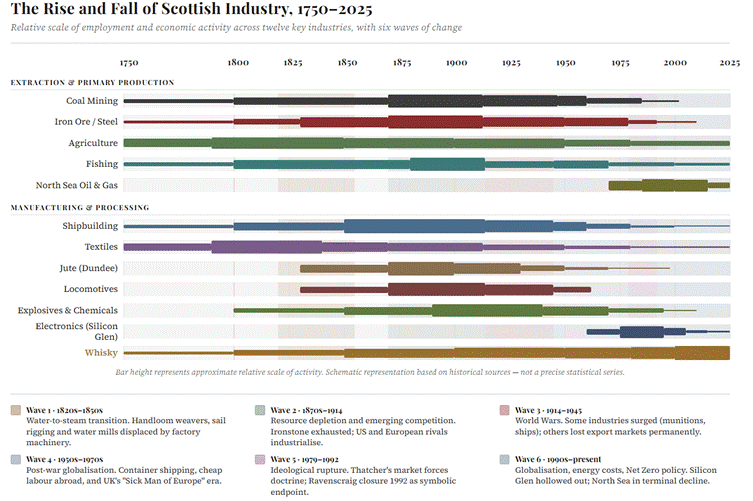
I have subsequently confirmed, after writing this entire chapter, and been reassured that this model broadly reconciles with established academic thinking. Jim Tomlinson, one of the leading academic voices on British deindustrialisation, argues that decline was a long-term process rather than a single Thatcher-era event, which is exactly what my framework shows. Most academic work on deindustrialisation covers the period from 1870 (when Britain’s economy was seen to be at its global peak) to around 2010. My essay starts slightly earlier, in the 1820s, to capture the technology transitions and resource depletion that preceded other models of industrial decline. It also extends to the present day, treating high energy costs and net zero policy as a distinct and ongoing sixth wave of deindustrialisation. And it applies the whole analysis to Scotland specifically which makes this analysis distinct.
Wave 1: 1820s to 1850s, initial technological innovations
In the early stages of Scotland’s industrial revolution, technological innovation drove a few massive disruptions. The shift from water power to steam power meant that industries no longer needed to cluster on river banks. The mills that used to cut timber, grind grain and make wooden goods were rendered obsolete. Scotland’s 80,000 handloom weavers were replaced by large factories with steam-powered machines. Sail canvas and rigging became obsolete as sailing ships gave way to steamships. These changes were not caused by globalisation. They were caused by technology changing faster than workers and communities could adapt.
Wave 2: 1870s to 1914, resource depletion and emerging competitive pressures
Scottish blackband ironstone, the local source of iron ore, was largely depleted by the 1880s, meaning that industry had to import iron ore from countries like Spain, Norway and Sweden. Large-scale use of timber for making charcoal, processing hides and building ships had almost depleted Scotland’s forests. Extensive herring fishing also reduced fish stocks, meaning that fisherman had to range further afield to fill their nets. Furthermore, European countries and the United States had started to industrialise and compete with Scotland, previously safe markets.
Wave 3: 1914 to 1945, a time of world war
The great wars had a mixed impact on Scotland’s industry. The wars stimulated certain industries such as shipbuilding, munitions, and chemicals like explosives. These all surged during war times since they were needed by the military. The world wars also revitalised Britain’s agricultural industry for brief periods. For example, at the onset of World War Two, Britain imported almost two-thirds of its food, but when its supply chains were disrupted due German U-boats, it rapidly mechanised agriculture and made use of every square of agricultural land, with many women moving into agriculture and tending the land. By the end of the war, Britain produced three-quarters of its own food, calculated in volume and not calories. The caloric figure, however, was lower. (This shows an important lesson of always retaining a level of industrial self-sufficiency, which can be rapidly expanded in emergencies when supply chains are disrupted. Nowadays, Britain imports almost half of its food.)
But other industries declined during war time, and the period between these wars. The wars killed hundreds of thousands of workers, disrupted trade and export markets, put many countries (including the UK) deeply into debt, and shifted the global industrial centre to the United States. For example, herring exports to Germany and Russia collapsed during the wars, and never recovered.
Wave 4: 1950s to 1970s, the post war decline
This was an intense period of globalisation. Safe shipping and maturing international finance made it easier to shift industries to cheaper countries, disaggregating supply chains as businesses could reliably source components from around the world. Massive container ships emerged during this period. It is sometimes called the Golden Age of Capitalism.
Japan’s steel industry, shipbuilding, electronics and vehicle manufacturing grew during this period. South Korea and Taiwan moved into advanced steel manufacturing, vehicles and shipbuilding. Taiwan invested heavily in advanced electronics, its key industry nowadays. Germany grew its heavy manufacturing industry, including vehicles. France invested in industries like nuclear and aerospace. Italy moved into fashion, engineering and consumer goods, and other industries. Industry in the United States continued to ascend. While these other countries were investing in critical industries with critical conviction, the UK’s industrial policy during this period was lax and inconsistent, with Britain being referred to as “The Sick Man of Europe”.
Wave 5: 1979 to 1992, ideological failure
I see this is as the “hands-off” period of economic policy where policy makers believed that natural market forces would determine which industries would survive. It was a “survival of the fittest” approach where Scottish industry was fully exposed to the global marketplace.
Margaret Thatcher’s government made a philosophical decision that uncompetitive industries should close and that market forces should determine what replaced them.
Steel, coal, shipbuilding and manufacturing broadly all experienced their sharpest contractions in this period. I’ve used the closure of Ravenscraig Steelworks in Motherwell as a symbolic example of endpoint of this phase. To put things in perspective, Germany, Italy, France, Spain, Austria and Sweden all have vibrant steel industries to this day.
Germany is worth examining more closely. It imports over 95% of its iron ore, which means its steel industry does not rely on domestic mining. Its competitive advantage lies not in the early-stage processing of steel but in its ability to create sophisticated engineered products from it. That is value chain progression in practice. And Germany has achieved all of this while maintaining high labour and environmental standards. The contrast with the UK could not be starker.
Silicon Glen emerged in the Central Belt of Scotland during this period in an attempt to replicate the model of Silicon Valley in California, but the early 1990s it was already showing signs of strain with closure of some key plants and thousands of job losses.
Wave 6: 1990s to present, with pressures of globalisation, energy costs and net zero
Continuing with the story of Silicon Glen. This industry become hollowed out with the dot-com crash in the early 2000s, and with electronics manufacturing jobs moving to Eastern countries like South Korea, Japan and Taiwan that had been significantly investing in these industries for decades. Tech jobs in Scotland were decimated during this period.
There are three other factors I’d like to touch on to illustrate this wave.
First, let’s consider the North Sea oil and gas industry which has been a significant employer for decades, with almost half of all jobs located in Scotland. Total jobs in this industry declined from approximately 300,000 during the mid 2010s to slightly over 120,000 nowadays. Job losses of up to 1,000 jobs per month are not being replaced by equivalent “green jobs” as promised. I have interviewed people in Aberdeen on other projects, and anecdotal conversations confirm this phenomenon. Over 90% of reserves depleted, and the remainder non viable with existing technologies, with extraction costs now higher than other gas- and oil-producing countries. Finally, windfall taxes discouraged investors and demand has reduced due to other fuel sources.
With the ongoing war in Iran and blockades in the Strait of Hormuz, as I write this essay, there has been renewed conversation about investing more in North Sea oil and gas extraction, but the evidence above suggests that this would be a poor decision.
Second, energy costs started rising significantly across Britain, more than 50% since 2008.
This significantly undermined various Scottish industries, probably more than any other factor, and making current and new industries uncompetitive in the global arena
Policy pressures around net zero pressures, and methods of carbon accounting, have helped shift industry to other countries so that territorial carbon emissions calculations can be optimised. I see this has an “Out of sight, out of mind” phenomenon.
I’ll address both the rising energy costs and implications of Net Zero policies in the next chapter in more detail..
The current direction of these waves suggests that without significant change in policy and political will, industries are more likely to continue declining than to recover. Whether that change is possible is what the remainder of this essay examines
6. Why did Scottish industry disappear?
There are ten main reasons why critical Scottish industries disappeared or declined significantly. An interplay between these reasons typically led to their collapse rather than any single cause.
The first six reasons are linked to global market forces and competitive behaviour, combined with an inability or unwillingness to adapt in time.
The seventh, eighth and ninth reasons relate to a failure of UK government policy. These reasons are still largely present in government policy and continue to have an impact.
The tenth reason explains the four underlying ideologies that inform how policymakers tend to view industry. These significantly impair the government’s ability to sustain and grow an industrial base for the Scottish and broader UK economy.
These reasons are not just historical. They all persist today and will continue to undermine existing industries while handicapping the development of new ones.
6.1. Ran out of raw materials in Scotland
The Industrial Revolution consumed enormous quantities of resources, often with no sense of consequence or scarcity. Here are the most relevant examples.
The depletion of ironstone meant Scotland had to import iron ore from countries like Spain and Sweden so it could make steel for ships, railways and other equipment. This ironstone ran out by the 1880s, and the remaining stocks were not viable to mine further.
The depletion of limestone meant there was no flux for blast furnaces – flux helps separate and aggregate the impurities of metal from the iron so that they float to the top of the large pots of molten iron and can be scraped off.
Fish stocks such as salmon and herring were depleted through overfishing and damage to the ocean floor through rough trawling, where weighted nets were dragged across the ocean floor. And fish in the rivers were depleted through pollution.
Timber was depleted to make wooden ships and houses, and to serve as fuel for furnaces in smelters and steam turbines. Scotland’s forests were already significantly deforested before the Industrial Revolution, which accelerated this trend.
Fertile agricultural land was reduced through intensive farming of what little good arable land there was in Scotland, and the draining of wetlands caused long-term soil degradation. While soil management methods like crop rotation were applied, they were not as sophisticated as those used nowadays.
6.2. Manufacturing and processing shifted closer to raw materials and key inputs
Scotland relied on importing iron ore from countries such as Spain, Sweden, North Africa and Greenland after it depleted its own ironstone stocks. Certainly, Spain and Sweden realised that it is better to make and export their own steel, competing with Scotland while also supplying it. The Scottish steel industry couldn’t compete effectively against countries mining their own iron and processing their own steel.
The Indian government decided to process its country’s own jute into products like rope, sacking and canvas, and to export instead of bales of unprocessed jute. This created more local economic benefits for Bengal. This meant that Scotland, particularly the town of Dundee, lost its supply of raw material and gained a competitor. This shift was complete by the end of World War 2.
These two examples highlighted a pattern that took place across several industries. For example, Egypt and India decided to develop their own cotton industries rather than export to Scotland.
The American Revolution meant that Glasgow, which had a big tobacco industry, was no longer able to get preferential access to raw tobacco leaves, which were previously routed primarily through British ports.
The same also happened to sugar processing. Raw cane sugar was previously imported from the Caribbean, Africa and Asia, but these countries decided to develop their own processing capacity.
The pattern is what I described in my initial chapter on industrialisation. The countries exporting raw material and partially processed goods to Scotland realised that they were losing significant opportunities – they were selling raw materials at a low rate and buying back finished products at a premium, with the economic benefits accruing to another country. The Scottish industries built on imported inputs were the most vulnerable to collapse since there were no natural resources to fall back on.
6.3. Labour costs became too expensive for low-value products
Industries that produce low-value products typically to require large pools of unskilled or semi-skilled workers to extract, produce, prepare and package them for sale. This principle covers industries like mining, fishing and agriculture. This is a separate dynamic from the availability of raw materials or countries wanting to own more of the value chains.
Since these products tend to compete on volume and price, traders go to markets and buy large volumes as cheaply as possible. For example, a trader might buy bags of recently harvested soybeans from a farmers’ cooperative and then sells to a company that processes these beans to make soy burgers for supermarkets. I remember it wasn’t unusual in Kenya or Zambia to encounter agricultural processors with tens of thousands of smallholder farmers in their supply chain who were mostly paid a set market rate per kilogram. This model works since the annual income of these farmers is much lower than an engineer at the food company responsible for more complex industrial processes. If the farmers were paid more than a certain fair rate, then the soy burgers in the supermarket would be prohibitively expensive and no one would buy them.
This same principle took place during the collapse of certain Scottish industries. Low skilled production and processing was outsourced to countries with much cheaper labour costs and large numbers of people willing to work for comparatively low wages.
Let’s start with jute production. In addition to the Indian government wanting to gain the economic benefits of jute being processed within the country, some Scottish industrialists chose to invest in jute mills based in Calcutta because the labour costs were so different. In other words, these textile industrialists chose to outsource their own industry.
The same pattern took place within the broader textile industry. Once factories and machines could be installed anywhere, and people easily trained to use them, industrialists chose to invest in locations with cheaper labour costs. The manufacture of garments were then outsourced to countries in Asia from around the 1960s to where they could be produced more cheaply in countries like India, Pakistan, Bangladesh and China. Those clothing brands that survived like Pringle positioned themselves as high-end Scottish brands.
Glasgow’s precious shipbuilding industry was also subject to this pattern. Japan and South Korea both invested heavily to develop the capability to build ships much cheaper than those on the Clyde were produced. Even though shipbuilding required a wide range of technical skills, these countries had cultivated sufficient tradesmen and engineers with equivalent skills, who were paid comparatively lower rates than those in Scotland for the same work. These governments also invested in more modern factories and production methods. The shipbuilders in the Clyde simply couldn’t compete.
I was unaware when I begun my research that Scotland had an electronics manufacturing industry, fondly titled “Silicon Glen”. This was not a glen per se, but rather a grouping of electronics companies in a triangle area between Dundee, Inverclyde and Edinburgh. Big electronics companies like IBM, Motorola and Hewlett-Packard established factories within this region from the 1960s onwards, employing tens of thousands of people at their peak. Sadly, they also moved to Europe and Asia in the 1990s where the governments were significantly investing these industries, and labour costs were simultaneously much cheaper.
For a final example, I’d like to touch on call centres, which for a while was one of Scotland’s key industries. There have been several occasions when I call a helpline for something like Tesco or an insurance company, and I’m answered by someone with a South African accent since the call centre was outsourced to Cape Town or Durban. We often end up having a long friendly chat, exchanging stories. South Africa is in a similar time zone with an abundance of unemployed English-speaking graduates looking for work.
The pattern is the same in every case. Scotland had a labour cost advantage that gave certain industries a competitive edge. A country with cheaper labour then invested heavily in that same industry and undercut Scottish production. Investors followed the lower costs. The industries that survived were those able to produce sufficiently complex goods where higher labour costs were justified, or those that built strong premium brands that customers were willing to pay more for.
6.4. Demand for specific industrial goods declined
Some industries declined because they were narrowly focused on producing a specific product. When local and global demand shifted, these industries either had to pivot and retool or close.
For example, I touched on how the demand for locomotives declined after electricity became widely available and British Railways electrified its network and also started using diesel locomotives. The same trend happened in its export markets. The North British Locomotive Company tried to pivot into producing diesel locomotives, but lacked the expertise and capital. A similar thing would have happened to the manufacturers of steam-powered farming equipment as diesel alternatives arose.
Here are some other examples from the industries I highlighted earlier. Demand for jute from Dundee’s mills declined after synthetic fibres, ropes and sacks became widely available. The industry couldn’t pivot because its skills, machinery and supply chain were built around a single natural fibre.
Prior to steam shipping, Scotland had a large industry producing sail canvas, rope and rigging for wooden sailing vessels. This all collapsed when iron-hulled steam-powered ships made their appearance. These original materials, skills and machinery found no application within the new shipbuilding industry.
The shale oil industry collapsed when liquid crude oil became more widely available, and proved much more efficient at creating fuel and other chemicals. The last Scottish shale mine closed in 1962.
Scotland’s massive herring industry vanished, not only because of declining fish stocks, but also because its export markets of Scandinavia, Germany and Russia declined after World War 1, due to declining demand and trade restrictions on wooden barrels of salted herring. Consumer tastes also changed during this period.
In a final example, the Scottish linen industry shrank once raw cotton arrived from North America and elsewhere in large volumes, and cotton processing technologies such as ginning and spinning became able to produce cheap cotton thread, from which textiles could be produced.
The pattern is consistent. Each of these industries had a narrow focus, dependent on a specific input, technology or market. When demand shrank, those able to anticipate the shift and retool in time survived. Those that could not, did not.
6.5. The UK currency became too strong relative to its competitors
Let me give two examples from South Africa and Kenya to illustrate the impact of currency on industry.
I lived in Cape Town, in a region called the Western Cape, before moving to Scotland in 2021. The Western Cape has a strong fruit industry, focusing heavily on citrus and wines, employing over 200,000 people, and providing valuable income for poorer households. The industry earns most of its income from exports. Whenever South Africa’s currency deteriorates, which it is inclined to do, the fruit industry celebrates, since this increases its income in local terms. But at the same time, it complains about increased fuel and shipping costs since these become relatively more expensive.
And here’s an opposite example, also in the agricultural industry. I remember dealing with a Kenyan company that imported farm machinery and fertiliser for local farmers. Whenever the local currency deteriorated, the price of this imported machinery and fertiliser increased, as did the petrol to fuel the machines. Since the company was serving thousands of relatively poor farmers, they couldn’t pass on the price to the farmers who couldn’t afford it. The farmers would rather do more activities by hand or other means than pay more.
A weak currency helps export industries grow and develop economies of scale, provided most inputs are sourced locally. As the UK’s currency strengthened over generations, it became cheaper to import goods than to produce and export them. This significantly undermined Scottish industry, which depended heavily on scale production for export markets.
The UK’s strong currency has benefited the financial services sector, based around London, since it’s a good indication of stability and profitability – an attractive investment. From the 1980s, the British government strongly prioritised low inflation, strong currency, open capital markets etc. It unquestionably benefited the Southern economy, centred around London. But these conditions were actively harmful to manufacturing competitiveness but enormously beneficial to financial services. The implicit assumption was that financial services growth would generate sufficient tax revenue and prosperity to compensate for manufacturing decline. This was seen to make the trade-off worthwhile, but many in the North wonder about this nowadays. The Barnett Formula insufficiently address the losses from this policy trade-off. This is one of the few arguments in favour of Scottish independence that has resonated with me – that Scotland can have a weaker currency than the rest of Britain which can help grow its economy.
6.6. Lack of progression on value chains
Throughout this essay, I have explained how more economic value is created the further along the value chain an industry progresses.
For example, the country that builds modern military ships accumulates more economic value than the country mining the iron. The country sells these products for more, earns more in tax revenue, has more skilled and better paid workers, and injects more money into the economy.
But the country with a big shipbuilding industry needs to secure a steady supply chain of affordable and quality inputs or this entire industry is at risk. If this supply dries up, becomes interrupted or unaffordable, then the entire industry is at risk.
This is a tension Scotland has always needed to manage, and still must. How do you progress along the value chain with as many industries as possible while keeping your supply chains secure?
It is easier to secure supplies of key inputs if they are locally produced, as would be the case of a food processor in Kenya that makes peanut butter and needs to secure a supply chain of good quality groundnuts. This is one reason why Scotland’s whisky industry has continued to thrive – all its key inputs, such as grain and water, can be relatively easily secured. Scotland also managed to brand it’s whisky industry as a high-end national product. But it’s much more complex for shipbuilding that requires a supply chain of various types of steel from steel producers who in turn, require a supply chain of iron ore. Sometimes, businesses will seek to vertically integrate and invest in an another stage of the value chain – for example, a shipbuilding company might invest in a steel producer as a way of strengthening its supply, or vice versa.
There were two key value chain problems that happened to the Scottish industries that collapsed. First, the industry hadn’t developed sufficiently far along the value chain and had not developed the required sophistication in operations to be defensible. This meant is was relatively easily replaced by an industry in a country with cheaper labour and more abundant supply of raw materials. This happened with its industries like textiles and tobacco. Second, it had developed extensively along the value chain like my shipbuilding example but failed to secure a multi-generational supply of the critical inputs it needs such as iron ore and steel. These industries collapsed when the imported raw materials became too expensive or were redirected to other countries or industries. There’s a third related failure worth considering. The British government failed to protect its steel industry in the 1970s, unlike France and Germany, which consequently weakened the supply chain of the industries that used large quantities of steel. This was policy shortsightedness that still impacts us nowadays.
Consider this example of China and green energy. It has been investing heavily in green energy (e.g., solar panels, wind turbines, batteries). It has a natural supply of the critical minerals needed for these technologies, which provides a big advantage. It has also proactively secured rights to the rare earth minerals produced by a few African countries, such as the DRC. And China is not just processing minerals, or making solar panels and batteries, but it is also making electric vehicles at much cheaper prices than other countries. By becoming the world’s biggest supplier of these technologies, it is also making its customers dependent on it, which gives it more bargaining power in future conflicts.
So Scotland is trying to become a world leader in green energy, but China is the one that has actively developed industry to produce these goods. The distinction is subtle. Scotland is managing to become a world leader in producing green energy as a proportion of its overall energy mix, but China is becoming a world leader in developing the industrial capacity and infrastructure required by countries like Scotland. The economic benefits accrue to China, not Scotland.
6.7. Energy costs became too expensive
Industry requires massive amounts of reliable, cheap energy, be that in the form of water power, steam power or electricity. This was provided during the Industrial Revolution, which is partially why the Scottish economy grew so significantly during this period. This energy powered massive smelters and other industrial operations, and enabled things to move from one location to another.
The UK currently has some of the most expensive energy prices in the world for industry in the developed world, as I explained in my reflection on the UK’s energy policies. According to the ONS in May 2025, as cited in this reflection, the UK’s price per kWh is 25.85 pence, compared with France (17.84 pence), South Korea (9.82 pence), Norway (6.54 pence) and the United States (6.48 pence).
Make UK, the manufacturers’ trade body, has stated it is unequivocal that high electricity prices are the single biggest barrier to industrial growth and investment, warning that UK industrial electricity prices are the highest in Europe and around four times higher than the United States. UK steel producers were paying almost 40% more for electricity than their French competitors in 2025.
A recent 2026 government consultation paper (“British Industrial Competitiveness Scheme: Consultation on Scheme Eligibility and Approach”) highlights the strong link between high energy prices and reduced economic activity in developed countries – specifically lower investment, productivity, employment and market activity. This paper also says that, “Between 2008 and 2020, electricity prices in the UK rose by approximately 50%, resulting in an estimated fall in manufacturing investment of between 13% and 26%.”
With these high electricity prices, the UK simply can’t develop an industrial economy, or other modern sectors of the economy such as data centres, AI and semiconductors, which consume high levels of electricity. The high energy costs are more like a solid wall than a handicap to developing the economy. This is one of the reasons so much of the economy has been outsourced, which has negatively impacted tax revenue, employment and the self-sufficiency of the country.
6.8. Reduced trade protection and subsidies
There is a prevailing view that all tariffs are bad for global harmony, that trade wars should be avoided, and that everyone benefits when tariffs and non-tariff barriers are eliminated. The World Trade Organisation was established to help achieve exactly this.
Tariffs have recently been on everyone’s minds after President Trump decided to drastically increase tariffs in 2025 on countries, based on their relative imports and exports, and how accessible their markets were to US companies. There almost seemed to be a moral outcry which I never understood. While I disagreed with his mechanism for calculating the tariffs, I couldn’t dispute the principle of using tariffs to protect local industries and jobs, and generate tax revenue.
Consider the examples of the shipbuilding and electronics industries in South Korea and Japan which I’ve mentioned in this chapter. Both governments chose strategic industries to develop and then did whatever it took to make them successful over decades. They used all available tools such as tariff barriers, non-tariff barriers, patient capital, subsidies and incentives to achieve this end. Both countries intentionally violated the free-trade paradigm that was emerging at the time to develop globally competitive industries. Similar principles were applied by the governments of other countries that took other industries away from Scotland.
In contrast, Britain did almost the opposite. In 1846 it repealed the Corn Laws which had protected local grain producers from competition. The Irish Potato Famine and several years of poor harvests meant that the government wanted as much grain to get into the country as cheaply as possible. Since Britain was a world dominant industrial power, it wanted access to everyone’s market and wasn’t threatened by other countries’ industries. It wanted to bring sources into the centre of empire and cheaply as possible. Britain became an advocate for free trade and open markets.
This entrenched philosophy and economic doctrine worked until the point when Britain no longer ran a powerful empire, and competitive industries begun emerging in other countries. The British government, especially by the time of Thatcher, didn’t believe in protecting or subsidising industries that were not able to stand on their own. This was seen as wasting good money that could be better used elsewhere, and distorting the free market.
I’ve mentioned Britain a lot in this chapter because Scotland didn’t have independent trade policy, so whatever was decided in Westminster, also applied to Scotland. This is still the case. For example, the British government chose not to protect Scotland’s steel industry in the 1970s during a period when the international market was oversupplied and consequently steel prices collapsed. In contrast, countries like France and Germany decided to actively protect their steel industries, understanding their strategic value to their futures. The results, these countries still have extensive steel processing capacity while Scottish firms like Ravenscraig Steelworks closed in the 1990s with massive loss of jobs and decreased national resilience.
I’m not arguing for unbridled protectionism, but rather highlighting how a set of tools such as tariffs and subsidies can be pragmatically used to protect and grow critical industries. Britain’s free trade ideology isn’t always the best approach.
6.9. Net zero and carbon accounting
The closure of the Port Talbot steelworks in Wales stuck with me and triggered a great deal of thinking about this topic. In 2024, Tata Steel UK, the UK’s largest steel producer, decided to close its traditional blast furnaces which relied primarily on coal and its byproducts as fuel sources. This has resulted in approximately 2,800 job losses. It has promised to build a replacement in the form of a new electric-powered furnace that would have much lower carbon emissions, but this was unclear when it was announced. In the mean time, the steel would largely be produced in India using coal-fired furnaces and operated with arguably worse environmental and labour standards, and other impacts, compared to the UK. The resulting steel would be then be shipped from India to Britain, causing much more pollution and emission along the way. This would also decrease Britain’s geopolitical security since these supply chains could be interrupted by wars and other conflicts. While the British trade unions were opposed to this closure, I remember it being lauded as a success in the media since it would help the UK improve its net zero score. I couldn’t understand how this was a win for the UK economy or for global emissions. The steel still gets made. The coal still gets burned. The ships still cross the ocean. Global emissions may actually increase.
The more I explored the idea of the UK’s Net Zero policies, the more I realised that it focused on emissions within national boundaries. This meant that businesses could outsource any “carbon dirty” operations to other countries and consider this a net success. I kept wondering about the lost jobs and opportunities for local businesses, as well as the loss of tax revenue and national resilience. To be clear, I strongly believe that industry should reduce their pollution and invest in nature conservation wherever possible, so my concern with net zero is not a moral one. I would much rather have the principles of net zero applied through a global lens where carbon emissions are given equal weighting regardless of where they occur, and across an industry’s entire supply chain. I also believe that a broader lens should be applied where all types of pollution are considered; not just carbon emissions.
Unfortunately, the current UK protocols (initially the United Nations Framework Convention on Climate Change and refined in later agreements such as the Kyoto Protocol 1997 and Paris Agreement 2015) emphasise territorial emissions and so does Scotland’s Climate Change Act (2019 Amendment). While there is certainly good work underway to help companies report more broadly as I’ve suggested, this is not yet the norm in the UK.
The EU has tried to address this problem through the Carbon Border Adjustment Mechanism (CBAM), which puts higher tariffs on exported goods from countries with lower environmental standards, and then intends to use this tariff revenue to invest in EU-based conservation programmes. I first encountered it a few years ago in my trade-related work in Africa and remember an economist being quite terrified of its implications for the continent. But this will have devastating impacts on the economies of developing countries, which desperately need the export revenue. For example, Africa is expected to suffer a 1% loss in overall GDP from CBAM, and it will also reduce the EU’s access to raw materials from Africa as they will be exported to its competitors, thereby undermining their own industries, and Africa, which is vulnerable to the impacts of climate change, won’t see tariff proceeds invested in Africa. This endorses the principle that fair trade with developing countries produces much more net benefit than for development aid, a point I raised earlier in this essay.
The economic price of the UK’s Net Zero transition is a subject of intense debate, largely because of how “costs” are calculated. In 2025, the government’s Climate Change Committee estimated a net cost of roughly £116 billion through 2050 (about 0.2% of annual GDP), a figure that assumes expensive upfront investments will be mostly balanced out by long-term savings on fuel. However, the Institute of Economic Affairs has strongly criticised this as over-optimistic. They argue the gross cost (actual cash required to overhaul the energy system) is far higher, and certainly in the £1-3 trillion range. While the total bill is debated, there is a clear consensus that the transition poses a major threat to energy-heavy industries and the local economies that rely on them, particularly in Northern England, Scotland, and parts of Wales.
These types of mechanisms are recent and didn’t impact Scotland’s historical industries discussed in this essay, but they are a significant impediment to the development of new industry in Scotland, since competitor countries don’t experience the same carbon accounting pressures or high industrial electricity costs. This arguably prevents the reindustrialisation of Scotland and places like Northern England, and help to keep the wealth centred around Westminster where policy decisions get made.
6.10. Political will declined to support industrial activity
Reflecting on the reasons discussed so far, some clear ideological patterns emerge.
Some industries collapsed because they became outdated and were unable to pivot. Some fell apart because they ran out of resources, or were replaced by competitors in other countries. Some failed because they hadn’t developed sufficiently sophisticated operations. These types of reasons were a mixture between poor strategies and global market forces.
Then there were some industries that suffered because of government policy, such as a lack of protectionism when it was reasonably required or extremely high energy costs. Recently, net zero and carbon accounting have further handicapped industrial activity in the UK.
Reflecting on these latter reasons, those relating to government policy, I realised that there were three underlying ideologies behind government behaviour, ideologies that still persist and will continue to hamstring attempts to develop an industrial base for the economy
First, there is a theory of economic competition that emerged in the mid-19th century. The central idea is that the government create a fair playing field with minimal government intervention, and then let all the industries and businesses compete naturally with each other, and whatever emerges is likely to be the strongest and best for everyone. However, those countries (e.g. Japan and Germany) that have developed strong industries all had strong and persistent government intervention and support.
Second, is the unconscious idea that Scotland’s industrial past was terrible for many people and the environment, and industry is inherently a “dirty and unpleasant affair”, something belonging in the past that shouldn’t be repeated if at all possible. Hence, any such industrial activities are much better done in other countries, preferably those that are far away and unlikely to ever be visited. These “sins” must be “exorcised” from the British economy. However, developed countries and regions (e.g. Switzerland and Scandinavia) with high labour and environmental standards have still managed to create significant and specialised industries.
Third, is the idea about the evolution of economies. I have a sense that many policymakers unconsciously see a progression from a subsistence economy to a feudal economy to a colonial-style economy where industrialists exploited the environment and natural resources (effectively using them as part of the machine for their personal wealth), to a more evolved and equitable knowledge and service economy. However, this is certainly not the mindset of developed countries with strong and sophisticated industries, of the types I’ve mentioned. And this mindset is certainly not present in Africa, where policymakers are actively trying to industrialise their economies and add more local economic value.
Fourth, is the existential anxiety of imminent global collapse of all ecosystems due to climate change and global warming. I agree that climate change is occurring and our planet is warming, and something must be done to mitigate and potentially reverse this situation. However, I believe we need to use a multi-faceted approach to tackling this problem.
For example, I have written elsewhere about our need for energy production to have a foundation of nuclear with renewables on top of that since nuclear power stations can be produced significantly cheaper than is currently being done in the UK, and because nuclear provides a stable frequency of electricity regardless of weather conditions, and because the nuclear value chain has less carbon impacts than most people realise and is largely within the UK’s control. I also believe that it is better to have industry in your country where it can adhere to higher standards rather than dirty industry elsewhere. I have noticed that laws and regulations can be an effective tool for reducing pollution if policed properly. I also believe that R&D into better industrial processes can have significantly positive effects. Finally, I believe measures of pollution need to be much broader than simply carbon emissions, and that policymakers need to balance the needs of people and society with environmental priorities.
These findings suggest that Scotland’s industrial decline was substantially ideological in origin. That mindset needs to be re-examined if Britain ever intends to sustain or grow its industrial base. I genuinely believe that Scotland, and more broadly Britain, has suffered a massive multi-generational loss of confidence in its ability to nurture industry. If a person carried this kind of accumulated self-doubt, we would say they needed therapy.
7. Consequences of deindustrialisation
The significant decline in key Scottish industries over the past 200-300 years has undermined national resilience, decreased employment, constrained supply chains, provided less tax revenue for the Scottish and UK governments to spend on infrastructure and social programmes, reduced human capital and the amount of money flowing into the economy. These are all significant negative impacts of industrial decline which have had far-reaching consequences for the economy and society.
Conversely, those countries that gained the types of industries that fled Scotland, are gaining an array of benefits from this shift, and are mostly doing everything they can do hang on to them since they’re incredibly precious to their economies.
7.1. Undermined national resilience
The world is not a safe space. Peace is a historical anomaly, as any historian will tell you.
Scotland must always be prepared for global conflict that will result in international supply chain disruptions, blocked markets and the need to protect national infrastructure against threat. It is shortsighted not have this in mind when designing economic policy. My essays on the UK’s energy policy and undersea infrastructure both touch on these themes.
Even during World War 1, Britain learned about the importance of self-sufficient food production, then it forgot it by World War 2 and had to learn it again, and then promptly forgot this lesson.
One more example, during the 1970s fuel crisis, when oligopolies started to influence the oil price, Britain learned the importance of self-sufficiency from an energy perspective, and now it seems to have forgotten it again. Then again with the Ukraine war’s impact on gas prices in 2021 and 2022, a lesson was briefly learned and then forgotten again.
I grew up in South Africa during the 1970s and 1980s when the Apartheid government was in power, and before the first national democratic elections in 1994. I remember distinctly the amount of economic and cultural sanctions levied against the country, where most Western countries refused to buy or sell to South African businesses. This required the economy to develop a high-level of self-sufficiency with local investment. This created some really strong and competitive industries once the economy opened post 1994.
For example, the South African defence and armaments industry was especially innovative and had become a major employer. It was able to export some innovative armoured vehicles (e.g. Casspir and Ratel) and mobile artillery systems (e.g. G5 and G6 cannons) to other countries. The former informed the designs of mine-proof vehicles that the US later “invented” and used in the Iraq and Afghanistan wars. South Africa even designed a comparable helicopter to the US’s Apache gunship, which was named the Rooivalk. (I once sat next to a Rooivalk engineer on a plane trip who told me lots of interesting anecdotes about its operations in Africa.) These sanctions also helped the country to develop its oil and fuel industry, food processing industry, pharmaceuticals industry and nuclear industry. (Few people know that South Africa even developed a nuclear bomb and was the only country in the world to voluntarily dismantle it.) South Africa’s pharmaceutical industry is also now a world leader in developing anti-retrovirals to treat HIV/AIDs.
The constraint of sanctions during Apartheid had an unintended consequence of strengthening South African innovation and industry. I see the same process visibly happening in both Israel and Russia as a result of sanctions – both these economies will become stronger and more risk-proof over the long-term because of sanctions from many Western countries. These examples go against the doctrine that opening one’s market and adopting a hand-off approach is the best way to grow desirable industries. Scotland and Britain had no such external constraint forcing them to retain and develop industrial capability. The open market provided a more comfortable but ultimately more corrosive form of deindustrialisation, and Britain is seeing the consequences of this philosophy.
Remember the saying, those who don’t learn from history are doomed to repeat it.
My belief is that Britain’s entire industrial economy is vulnerable to external shocks, and I hope that policymakers are doing sufficient scenario planning.
7.2. Decreased employment
Industries employ people and pay them salaries and wages. Unfortunately, overall levels of employment in industries have declined over the past several decades.
My graph in section 3.1.3 illustrates how the number of people employed in the UK’s broader production industry has declined from 8.6 million people in 1970 to 3 million by 2016, a loss of more than 5.5 million jobs over this 46-year period. And almost one-third of UK workers between the 1950s and 1970s were employed in manufacturing, a subset of the broader production industry, a proportion that has shrunk to less than one in ten workers today.
Focusing on Scotland, according to the Economics Observatory in 2022, and according to census data, more than half a million people stopped working in factories and workshops between 1901 and 2021. Employment reduced from approximately 924,000 to 202,000 people, even though Scotland’s population drastically increased during this century, giving a sense of the proportions.
The more sophisticated an industry becomes, and the further it progresses along the value chain, the more skilled its workers need to be – and higher skills are associated with higher pay. At the same time, sophisticated industries tend to be more mechanised, which reduces the need for unskilled and semi-skilled workers. If an industry is evolving along the value chain, the government must invest in building a broad base of advanced technical skills, as countries with thriving industries have consistently done.
The greater the number of highly paid workers within an industry, the greater the tax revenue, and therefore the more money the government has to invest in infrastructure and key industries. This creates a virtuous cycle, getting stronger with each revolution.
When people earn wages and salaries, they are inclined to either invest or spend the money. If they do this locally, then the economy strengthens, as additional businesses gain revenue from sales and are more able to access the investment capital they need to grow.
People with money from their salaries and wages are also able to improve the current and future living standards of their households, thereby reducing levels of poverty and their reliance on government benefits.
Increased quality employment is clearly a net win for a country. The converse is also true. Struggling or declining industries, or insufficiently evolved industries, tend to undermine an economy and increase reliance on government benefits.
7.3. Constricted local supply chains
Businesses have supply chains – in other words, they buy from businesses that buy from other businesses that produce or extract things, and even those businesses need to buy key inputs from other businesses.
Each of these businesses employs its own people, spends money on local goods and services, and pays an assortment of taxes.
Policymakers in Western countries too often overlook the power of an industry or large business to anchor supply chains involving hundreds of smaller local businesses. Collectively these employ thousands of people, inject money into households and communities, and benefit far more people than the headline employment figures suggest.
For example, when dealing with agricultural businesses in Kenya and Zambia, I was constantly amazed by how broad these supply chains were, more so than in South Africa, and much more so than in Scotland. I remember my paradigm shift after doing due diligence on a poultry processor in Kenya that bought 20 chickens each month from thousands of smallholder farmers, rather than relying on a single modern commercial farm. It slaughtered the chickens on site using a mobile abattoir and instantly put them in the freezer truck. This approach spread the impact of procurement much broader than it otherwise would have been.
Governments can also use policy to encourage the incubation and growth of small businesses in industrial supply chains. For example, all formal businesses in South Africa use a prescribed procurement framework governed by a controversial set of laws called the Broad-Based Black Economic Empowerment Codes of Good Practice (“B-BBEE Codes”). Businesses gain significant advantages linked to the extent they comply with these Codes. These Codes award points for the types of other businesses in their supply chain, the extent to which they procure from these businesses, and the amount of money they spend incubating and investing in them. Even though I disagree with the selection criteria for this component of the B-BBEE Codes and explicit handicaps provided to non-eligible suppliers, I do recognise its clear and obvious impact on those businesses that benefit. This is a much more codified system than Scotland’s recent Community Wealth Building approach, which I also reviewed from an African perspective. The “anchor institutions” achieve a massive economic benefit through their supply chains, especially if they are broad and local.
Here’s one final example to demonstrate the potential impact of supply chains. I did some work for the Enterprise Zambia Challenge Fund over several years. They invested in 25 agricultural companies, helping them to move further along the value chain and expand operations and exports, and ultimately increase their turnovers. This impact investment fund enabled 125,000 smallholder farmers to be brought into their supply chains at fair market rates, with farmers increasing their annual yields (and therefore incomes) by 42% on average. This benefited almost a million rural households.
I’ve focused on supply chains above, but an equal impact can be achieved further along the value chain. For example, a local company producing high-quality steel enables array of other engineering companies further along the value chain to succeed.
The moral of the story is that supply chains of manufacturing and processing businesses can have a massive positive impact on other local businesses and on employment. The converse is also sadly true. When Scotland’s industry collapsed or declined, then so did all the opportunities in their supply chains, and even the businesses they supplied, needed to shift their procurement to get their inputs overseas. This carried a massive opportunity cost.
7.4. Less tax revenue from people and businesses
Businesses pay income and other taxes. Businesses employ people who pay tax. Businesses use local suppliers that also pay tax. So the more successful and profitable businesses there are in the Scottish economy, the more resources the government has, and the more it can do. I explain how the Scottish and UK governments get their money in my essay on the sources of government income and how they can optimise it.
Taxes are, unfortunately, a fact of life, and have been so for thousands of years. In 1789, Benjamin Franklin, one of the founding fathers of the United States, said in a letter, “Our new Constitution is now established, and has an appearance that promises permanency; but in this world nothing can be said to be certain, except death and taxes.”
Broadly speaking, Scotland gets roughly two-thirds of its income from the UK central government in the form of a block grant, and the remainder through other taxes and charges. The UK government, in turn, gets 89% of its income from various types of taxes such as personal income tax, business income tax, national insurance, VAT and Council Tax. This money funds the block grant that Scotland receives.
But industrial activity, as a share of economic activity, has declined significantly over the past hundred years throughout Britain, thereby providing less tax revenue for the government. For example, consider the case of manufacturing (which is narrower than my definition of industry since it excludes industries like mining, extraction, agriculture and energy production). According to the Bank of England and World Bank data, manufacturing accounted for around one third of Britain’s economic output in the 1950s, falling to roughly one-quarter by the early 1980s and to about 8% by 2024. In absolute terms, the sector still contributes approximately £220 billion to the economy. However, as a share of total output, it has shrunk dramatically. Despite being one of the first countries to industrialise, the UK has experienced a more pronounced decline in manufacturing than many comparable Western economies, though the extent varies by country. What concerns me most is the decline of industrial activity in absolute terms, and the lost opportunities that accompany it.
The Scottish government desperately needs tax revenue – money earned at the level of local authorities and the devolved government, and taxes earned by the UK government. In the 2024/2025 financial year, the Scottish Government spent its total budget on providing social protection (30%) such as pensions and benefits, health services through the Scottish NHS (17%), education (12%) and local government services (10%) such as roads, housing and environmental protection. The Scottish Government is also required to pay an allocated share of the UK central government’s finance charges (4%), over which it has no say.
The link is clear. More industry produces more tax revenue to fund government programmes. When industry declines in absolute terms, so does the tax base. When people complain about government austerity and its consequences, they should equally be asking how to generate the economic activity that produces more tax revenue in the first place.
7.5. Decline in human capital
Governments, like those of Germany, South Korea and Japan, which I have discussed, all invested heavily in building the technical base of trade-related skills, and designing good apprenticeship systems. This helped equip their growth industries with the knowledge and they need for the future.
Similarly, these industries themselves helped upskill the people working for them, starting people in the ranks and then moving them upwards, into emerging positions, assuming they had appropriate skills and temperament.
And when people with good practical and technical skills resign, many are able to start their own competing businesses or become suppliers of other businesses.
The further down the value chain that processing and manufacturing activities progress, the higher levels of technical skills that they typically require. So advanced industrial activity, and the international competitive advantage that this brings, requires significant and prolonged investment in technical skills.
In 2024-25, over 95% of school leavers in Scotland were in positive destinations such as work, training, college or university three months after leaving school, which looks impressive. But less than one-third end up achieving a vocational qualification, as universities are encouraged as the preferred destination. Scotland has decreased numbers of young people starting apprenticeships. This approach feeds more into a service economy and is likely to constrain the development of industry. Contrast this with Germany, where half of young people enter into vocational training and apprenticeships which blend academic and practical skills, and are associated with high prestige and genuine career status.
There is also an interesting class element persistent across the whole of Britain – the working classes are “directed” towards more practical qualifications, while the middle and upper classes pursue more academic pathways.
I was encouraged by a recent conversation with a nuclear engineer who works on submarines based in Faslane, while painting miniature figurines alongside each other. He provided a positive appraisal of the Royal Navy’s training programme and how it was legitimately world-class, and that when technical staff eventually leave the military, they are in a good position to find jobs anywhere in the world. The military, and particularly the nuclear submarine programme, operates outside the ideological constraints that have shaped civilian skills policy. It cannot outsource its critical skills to cheaper countries. It cannot rely on importing trained engineers from elsewhere. And the consequences of skills failure would be catastrophic. So the military has maintained, by necessity, exactly the kind of rigorous, practical, and vocationally-oriented training system that civilian industry abandoned.
Scotland’s current skills agenda reflects a clear shift away from traditional industrial development. Government strategies prioritise workforce needs in sectors such as offshore wind, health and social care, and digital industries, alongside skills linked to the transition to net zero. While renewable energy, especially wind, does carry some industrial implications, the emphasis is largely on installation, maintenance, and specialised technical roles rather than on rebuilding a broad-based manufacturing sector. Beyond this, there is little indication of a concerted effort to expand large-scale domestic industry. Instead, the focus appears to be on service provision, care work, and high-skill technical niches, reinforcing the longer-term pattern of deindustrialisation within the Scottish economy.
There is very little in Scotland or England’s skills development strategies that Germany, Japan or South Korea would recognise as a serious commitment to growing a broad industrial base. Scotland has other priorities.
7.6. Less money injected into the economy and more leakage
When a significant British industry collapses, less money enters the economy and more leaks out. This damages the overall economic health of the country. The same principle applies at the level of the Scottish economy, even though Scotland shares a currency with the rest of the UK.
It is easier to explain this in the positive, since that is ultimately what this essay is about: whether and how industry could be used to improve the Scottish economy.
Let’s start with my own situation to highlight how money moves between countries. Money entered the UK economy when I moved my investments here from South Africa in 2021. This process required that I sell my South African Rands and buy British Pounds instead. This transaction had an infinitesimal impact on the currencies of both countries, increasing the value of the British Pound while decreasing the value of the Rand.
When British industry thrives and is making money, then foreign investors use Foreign Direct Investment (FDI) to buy British Sterling and invest in those industries, believing they will provide better financial returns than their investments elsewhere. The converse is also true.
When British industry thrives, and exports good products at reasonable prices, then businesses in other countries want to buy from them, so they buy British Sterling in order to pay for these products. The converse is also true. Britain imports wines from South Africa because this industry provides high-quality wines at affordable prices. (There are around 550 wine-growing estates in the region surrounding Cape Town, employing thousands and earning significant foreign currency.)
When British industry thrives, then local businesses and consumers are more able to buy many of the local products they need, rather than importing them. This keeps the money in the British economy. This also happens at a much more localised level. Certain ethnic communities, such as the Jewish community in certain countries, are renowned for creating microeconomies where they spend their money on each other’s goods and services, making the money go around many times over before leaking out into the broader economy. This has a massive impact on the economic wellbeing of that community. The same applies at an industry level, which is why governments often seek to create clusters of interrelated businesses within an industry. The converse also applies; when industry suffers, then manufacturing and processing businesses need to procure more inputs internationally.
When British industry thrives, helping an economy to do well, then local investors see the value in investing locally, and foreign investors see the value of investing in that same currency. The converse also applies. As the South African economy deteriorated, everyone with foreign earnings strove to keep their money in their foreign bank accounts, and everyone who had such accounts tried to move their money there. Even if these had minimal interest rates, they would still appreciate significantly in relative terms.
This pattern is not unique to South Africa. As Scottish and British industry declined, domestic investors faced the same logic. With fewer good opportunities to invest in local manufacturing and processing businesses, they chose rather to put their money into London property, financial instruments and overseas markets. This money simply stopped circulating within the productive industrial economy. A country that once attracted foreign capital because of its internationally renowned steel and shipbuilding industries, now rather had expensive houses in its capital city. That is a poor substitute for a vibrant industry
These interrelated principles illustrate how the collapse of Scottish industry, and British industry more broadly, negatively affected the economy of the country, while at the same time, improving the economies of the countries that successfully took over these industries.
8. Likelihood of Scottish industry returning
Scotland’s industry is unlikely to return in any significant form, at least on current trajectories. Many of the factors that undermined British industry persist today and will continue to handicap any new industrial development. No amount of nostalgia will compensate for that. Scotland is also constrained by its devolved status. It cannot deploy the macro-economic tools that matter most – tariffs, currency policy, trade agreements – because these are determined in Westminster. A meaningful industrial revival would require a clear and decisive policy framework capable of surviving changes of government.
Let us examine what Scotland and the UK’s industrial strategies have to say.
8.1 Scotland’s industrial strategy
Scotland’s current industrial strategy is primarily set out in two documents: Scotland’s National Strategy for Economic Transformation (2022) and Scotland’s Green Industrial Strategy (2024).
The first strategy is more broadly focused on the Scottish Economy and aims to create a fairer, wealthier and greener economy. Programmes focus on creating “Entrepreneurial People and Culture”, “New Market Opportunities”, “Productive Businesses and Regions”, a “Skilled Workforce” and a “Fairer and More Equal Society”, all underpinned by a culture of delivery. It recognises that “Scotland’s productivity lags behind that of many other advanced economies” and “there are deep-seated regional inequalities, with post-industrial areas performing less well.”
The key focus is that “the transition to a net zero economy presents Scotland with the further challenge of achieving a just transition that delivers positive employment, revenue and community benefits, in contrast to the industrial transitions of the 1980s.” The strategy document is clear, which is always good. It is also very values-driven, which I respect since strategies need to be underpinned by a clear philosophy.
This focus on a just net-zero transition is cascaded down into Scotland’s industrial strategy, which focuses almost exclusively on opportunities for green industry.
The Green Industrial Strategy is premised on the idea that changes in energy sources over the past three centuries have unlocked innovations and opportunities for new industries. This makes sense. This strategy also recognises there is a widespread global shift to renewables, especially in Scotland, and that North Sea oil and gas are set to decline due to accessible reserves running out. This also makes sense.
This industrial strategy aims for Scotland to benefit from the growing green industry and shift to net zero, taking place globally. It also believes that large numbers of green jobs can be created in Scotland, and that Scotland can export green energy, goods and services. I question the validity of this claim and have raised my concerns elsewhere in this essay.
It believes that achieving this will require an active state and acknowledges that businesses and workers are the key drivers of growth. It states that, “with the right focus, support, investment and partnerships, Scottish businesses and workers can innovate, capture new markets, create new jobs and diversify the workforce, solve problems with new products, and sell their expertise to the world.” This principle makes sense.
The strategy focused on five key areas. It wants to maximise Scotland’s wind economy, improve carbon capture and energy storage, support green services, strengthen the hydrogen sector and establish Scotland as a centre for clean-energy-intensive industries of the future. I’m certainly not averse to these focus areas, and I do like focused strategies, but I wonder about all the other industries that Scotland might be overlooking. I also wonder about the competitive advantage of these industries relative to China and other countries that have invested in this area. (Scotland relies increasingly on imports of Chinese green technologies.) The constraints that accelerated and intensified the decline of prior Scottish industries are still present in policy and in the mindsets of policymakers. Furthermore, constraints like tariffs and currency value are outside of the control of the Scottish government since they operate at the UK level.
This industrial strategy also discusses how to create an environment for growth, such as creating an investor-friendly environment, investing in R&D, developing skilled workers, growing local supply chains, etc. These are fairly standard drivers to construct a suitable ecosystem, and I largely agree with them.
Over the past few years, I have become more sceptical about the employment claims made for wind farms. I originally assumed large numbers of jobs would be created in building and maintenance. Working on a related project, I soon learned that wind farms tend to require small, highly specialised crews that move from site to site. Any broad-based community impact therefore comes primarily from community benefit payments, which are typically paid at the recommended rate of £5,000 per installed MW per year. This is a pittance compared to community-owned wind farms, which pay out 34 times more on average according to a study commissioned by the Point and Sandwick Trust, and which keep far more money circulating in the local economy. I’ve also heard consistent anecdotal evidence that the promised “green jobs” are simply not materialising at scale.
In summary, while there are things I like about Scotland’s Green Industrial Strategy, I’m concerned that it’s too narrowly focused on a certain category of industry, while possibly overestimating its likely impact on jobs and GDP, and underestimating the level of competition from other countries. My sense is that there are many UK-level constraints that Scotland can’t overcome.
8.2. The UK’s industrial strategy
The UK’s Modern Industrial Strategy (2025) adopts a broader view than Scotland’s Green Industrial Strategy. The strategy and policy paper is also a much longer document, which is not necessarily a good thing.
It opens by saying that the UK is “open and entrepreneurial…[and] an unashamed champion of global trade.” This phrase already indicates the UK’s economic philosophy, which I’d highlighted earlier in this essay – the desire for open markets and a hands-off approach.
The UK government’s strategy wants to “make it easier and simpler for companies to do business, giving them the stability to make long-term investments.” It aims to invest more in city regions and clusters across the UK where the IS-8 are based”, and “transform the highest potential sectors over the next decade.” Finally, it states that partnerships between “business and a stronger, more capable, and more agile state” are required. These priorities are broken down into a list of 30 broad goals.
The IS-8 industries:
- Advanced Manufacturing: Transforming through digitisation and decarbonisation.
- Clean Energy Industries: Focused on energy transition and sustainability.
- Creative Industries: Covering film, TV, video games, music, and marketing.
- Defence: Supporting national security and resilience.
- Digital and Technologies: Driving AI, data, and technology innovation.
- Financial Services: A long-standing UK strength in banking and finance.
- Life Sciences: Focusing on health innovation and research.
- Professional and Business Services: High-growth services aiding business operations.
I’d consider many of these IS-8 industries to be service sectors. Half of these eight are the types of industries that I have been referring to throughout this essay, particularly Advanced Manufacturing, Clean Energy, Defence, and Life Sciences.
My overall sense is that this strategy is a broad wish list of priorities and goals, too many to focus on, and that some goals are irreconcilable with each other. For example, here are some tensions.
One, the strategy wants to simultaneously commit to promoting free and fair trade through openness and to strengthening economic security through strategic investments in critical supply chains.
Two, the strategy emphasises that it wants to place private business, entrepreneurship and innovation at the heart of renewal, yet simultaneously proposes that government will back eight specific sectors using a range of interventions to help them succeed.
Three, the strategy commits to becoming a clean energy manufacturing superpower and delivering the net-zero transition, while simultaneously committing to tackling high industrial electricity costs, which include subsidies to support renewables.
Four, the strategy focuses investment on eight high-potential sectors, the IS-8, while also committing to strengthening foundational industries like steel, chemicals and ports that support those sectors, which are the same ones the government has let decline.
Five, the strategy repeatedly emphasises that this is a ten-year commitment and partnership rather than a point-in-time publication. But it was published by a Labour government that may not be in power for ten years.
Six, and finally, the strategy commits to spreading growth across nations and regions and ensuring more people have access to good jobs across the country, while simultaneously focusing on existing IS-8 clusters and corridors.
What connects all six of these tensions is a reluctance to prioritise.
This strategy seems nervous to make difficult choices, and it is unclear how it will reconcile these dilemmas and trade-offs. Those countries with a strong industrial base in their economies, countries like Germany and South Korea, were very likely able to make these tough choices and achieve political alignment across the spectrum. I found Scotland’s strategy to be more clearly written and focused than the UK’s industrial strategy, though I disagree with its exclusive focus on the green economy.
This kind of strategy document is designed to hold together business, regions, unions, and environmental goals, trying to satisfy a range of stakeholders. It tries to postpone conflict rather than tackle necessary tensions. It also manifests many of the types of ideas that led to the decline of the UK’s industrial economy in the first place. It is therefore unlikely to significantly grow British industry.
8.3. Prioritisation of the service economy
Approximately four-fifths of the Scottish economy and broader UK economy are based on income from providing services instead of making goods. Services have increased as a proportion of GDP over the past 50 years, while industry portion has correspondingly decreased. This is according to the Scottish Government and Bank of England.
There is no trade-off between goods and services. The idea that you must choose one or the other is a fallacy. Industry needs services to grow – accounting, marketing, engineering, trade facilitation and laboratory services among them. A growing industry increases the demand for services. When industry declines, so does the need for services.
This contradicts one of the ideas I’ve identified as driving Scotland’s deindustrialisation, which is the belief that a service economy is simply what comes after an industrial one, and that this is natural and desirable. Post-war economists like Colin Clark and Daniel Bell gave this idea academic credibility, and by the 1970s, it had become something close to an underlying philosophical framework in British policy circles, informing the approach of the Thatcher government. Services were the future. Industry was the past. This enabled politicians to tell a story of progress that seemed to explain the trends. But the countries I’ve cited as industrial successes (e.g. Germany, Japan, South Korea) never told themselves this story.
So it is possible to have a strong service economy and a strong industrial economy. All the countries that I’ve cited in this essay as having strong industries also have strong service sectors.
I am apprehensive about the risks of glorifying services above industry at the level of an economy. Many types of services can relocate at a moment’s notice, especially with how familiar people have become with remote work.
Living in Cape Town for most of my life has given me a unique perspective on the mobility of services since it’s a well-known location for digital nomads and for outsourced services. Equivalent services in South Africa can be purchased for 25% of the price as in the UK. Cape Town is in a similar time zone to the UK. The cultures are similar. It has an oversupply of hardworking people with degrees who speak good English and are unemployed. The legal and policy frameworks in the UK are similar enough that they’re easy to learn. Cape Town is also an attractive destination for some UK managers wanting to check up on their outsourced operations and claim their sunny holiday as a business expense.
I have had dealings with several businesses in Cape Town that directly serve UK customers or provide labour-broking services to the UK. These include call centre services, legal services, marketing services, recruitment services, immigration services, IT services, fundraising services and financial services. My website designer lives in Cape Town. My wife used to work for a legal firm that managed the contracts for the financial services sector in the UK. I have often considered setting up an outsourcing business once I find the right opportunity, since the model is well established and the path well-trodden. Many of my friends and acquaintances in Cape Town work for multinational IT companies like Amazon, Microsoft and Oracle. As technology and remote work continue to improve, more services are likely to relocate to Cape Town and similar places around the world.
These outsourced services could, even themselves, relocate quite rapidly if needed. For example, if the South African electricity grid collapsed over an extended period, then a call centre could be moved from Cape Town to somewhere like Mumbai or Delhi, and software installed and experienced staff trained fairly rapidly, possibly within a few days. I have spoken with customer service staff based in both South Africa and India on several occasions while calling the helplines of British businesses.
There is obviously a limit to the types of services that can be reallocated. While my barber is currently in Turkey getting her teeth done for a fraction of the price in Scotland, and staying at a sunny hotel with lots of swimming pools, she has to be in Paisley to give me a haircut.
I do not trust the permanence of any service that could be delivered remotely, with the exception of highly regulated services like banking, or those that require face-to-face contact or physical site inspections. I have seen how much of the UK’s service sector is already outsourced at scale, and how quickly work moves elsewhere once the economics make it obvious to do so.
Furthermore, as a side note, outsourced services are the same as imported services, contributing to the UK’s trade deficit. While it might make business owners and entrepreneurs wealthy, it weakens the economy overall, undermines the amount of money in circulation, and reduces government revenue from payroll taxes.
Contrast this with a sophisticated engineering or pharmaceutical business. It is not just the physical plant that is hard and expensive to relocate. It is also the regulatory accreditation, the trained workforce, the local supply chain relationships and the institutional knowledge embedded in the site – all of it representing decades of accumulated value that cannot be quickly replicated elsewhere. When you close a sophisticated manufacturing or processing facility, everything that made it viable is lost or jeopardised along with it.
The British government, which once believed that services would evolve to replace industry in a modern economy, could not have foreseen the technological improvements that have made it much easier and quicker for services to vanish into other countries than factories can.
9. Discussion
I researched and wrote this essay to answer the question of where and why so many of Scotland’s historical industries had disappeared. Whenever I visited cities, towns and villages throughout Scotland, I kept noticing relics and memories of past great industries. Even this morning, I was chatting with an elderly gentleman who nostalgically explained how happy he was as a welder in the shipyards on the Clyde when he was younger – he loved the camaraderie and how he could admire his work at the end of each day.
The mystery of Scotland’s disappearing industries has been with me since I moved from South Africa to Scotland in 2021. I found this phenomenon very strange since many African countries are desperately trying to develop their industries, and yet by comparison, there seemed to be almost none in Scotland, and what had existed seemed to be in decline.
To further compound the mystery, I was unconvinced by promises to regrow Scotland’s industrial sector, and the UK’s for that matter. Policymakers seemed much more comfortable focusing on the services sectors and on some niche green industries related to the net-zero transition.
I started this research with a curious and open mind, and a few hypotheses I wanted to test.
My investigation took me back three centuries to the start of the Industrial Revolution and the corresponding Agricultural Revolution. I focused my analysis on a sample of 10 industries that were almost synonymous with Scotland. Most of them no longer exist or have significantly declined. The one exception is Scotland’s whisky industry which continues to grow and thrive.
This historical research revealed how these industries invented and used large-scale machinery, chemical and manufacturing processes to create products at scale. This generated massive amounts of wealth and grew the Scottish economy exponentially. But this industrial growth also had many negative impacts. It recklessly consumed natural resources such as coal, timber and fish. It exploited workers and polluted the environment. It was associated with a massive shift of people from rural agricultural settings into poverty-ridden housing as they were forced off their land and moved to the towns and cities to find work. The industrialists got rich and famous. Many lived in luxury.
But these industries did not last forever. Some, such as the herring industry, died when the raw materials ran out. Other industries were able to import sufficient quantities of raw materials such as iron or jute from other countries, until such time as these countries realised the value in developing their own industry to consume their own raw materials. Those industries that couldn’t secure additional supplies of raw materials died out.
I learned that energy production and transport infrastructure were intrinsic to industrial development. Energy production moved from water mills to coal-powered furnaces and coal-fuelled steam engines. This coal-powered steam technology evolved to turn the turbines that generated electricity for the national grid, eventually being replaced by gas-powered turbines and recently by wind turbines as the primary energy source for British industry on those windy days across Britain. The extraction and processing of crude oil created fuels like diesel and petrol, enabling machines, generators, ships and vehicles to function where electricity was not available.
Scotland’s transport network for industry also evolved. The transport of raw materials and finished goods evolved from animal-drawn carts and rivers to include an extensive network of canals, many of which still exist nowadays. This primary mode of transport was replaced by national railways with steam-powered locomotives, which were ultimately replaced by locomotives with diesel and then electric engines. Sailing ships were replaced by steamships, which were replaced by ships running on oil-based fuels. Each shift in the mode of power generation and transport undermined certain industries while uplifting others.
The two great wars, World War 1 in 1914-1918 and World War 2 in 1939-1945, were inflexion points in Britain’s industrial development. Trade was disrupted significantly. Consumer tastes changed. Military-focused industries underwent a rapid period of investment and growth. Export markets like Russia and Germany were disrupted. Policymakers learned about the importance of economic resilience and then promptly forgot about it.
As the world economy progressively globalised in the 20th century, and as trade became more integrated, and as international financial systems matured, so industrialists were able to spread their supply chains across different countries, looking for cheaper raw materials and labour. To navigate this shift, Britain increasingly chose to adopt a free market and “hands-off” approach to its economy, believing that the strongest and optimal industries would emerge through open competition and the result would be better for the country overall. This philosophy and consequential strategies were exemplified by the Thatcher government in the 1980s and continue to some extent today. This approach was different from how post-war industrial strategies of countries like Germany, France, South Korea and Japan, which actively intervened and protected key industries, many of which are still thriving today.
Furthermore, Britain also seemed to embrace an evolutionary theory of economics, one where an economy evolves from “primitive” production and extraction activities like agriculture and mining, into an industrial economy, and then into a service economy. I believe that underlying this theory are negative associations with the Industrial and Agricultural Revolutions. While these significantly grew the British economy and improved living conditions, they are also associated with a range of negative social and environmental impacts. I suspect many British policy makers unconsciously believe that industry is “dirty” and “ugly” and therefore best sent to other countries where it is “out of sight, out of mind”.
I believe these philosophical frameworks – the laissez-faire approach, evolutionary theory and perceived dirtiness of industry – all undermined British industry and persist to this day.
Then, most recently, in the past two decades, the British industry has been undermined by two additional influences. The first is the extremely high industrial energy prices – some of the highest in the world, and four times that of the United States. This almost prohibits the success of energy-intensive industries, including modern ones like data centres and artificial intelligence. Electricity bills are currently influenced by international gas prices (as per the marginal pricing mechanism) and include subsidies to develop renewable power sources. The second influence is the transition to net zero, which emphasises territorial-based calculations of carbon emissions (carbon pollution less carbon sequestration). These two influences encourage businesses to outsource any heavy electricity or carbon-emission activities to other countries, thereby further undermining industrial activity in the British economy.
Finally, the British government has maintained a relatively expensive currency (the pound sterling). This has proven great for the financial services sector around London, but undermined the international competitiveness of industries in Scotland and Northern England. This trade-off is insufficiently compensated by the Barnett Formula, which allocates central government funding to regions throughout the UK.
Together, these three philosophical frameworks – combined with high electricity prices, net zero policy and an overvalued currency – have made it very difficult for Britain to restore its industrial base. Rather than achieving a smooth transition to a superior economic model, these policies have had far-reaching unintended consequences: undermined businesses, falling employment, reduced tax revenues, constricted supply chains and weakened national resilience.
As someone who has spent most of my life working in Africa, it seems shortsighted for Britain to suffer so much, and work so hard to develop internationally-renowned industries, and then to simply let them weaken and die. In stark contrast, the African countries I’ve worked with are desperately trying to move along their value chains, shifting from production and extraction through to more advanced manufacturing and processing, thereby adding more economic value to their economies. They are very innovative and export-focused. They see the merits in an industrial base, as do several other developed countries, but Britain seems preoccupied with developing a largely service economy, which accounts for four-fifths of its GDP.
Service sectors can and should exist alongside industrial sectors. Services help industries grow, and growing industries help services grow. Services also help people to live well. The relationship is synergistic, not a zero-sum trade-off.
But service-centred businesses can disappear even more quickly than local factories with their complex supply chains, production accreditations and skilled workers. Having lived in Cape Town for much of my life, I can see how many service businesses have outsourced significantly to Cape Town, and how quickly and easily this can happen.
10. Conclusion
So what does the future hold for British industry? I am not optimistic. Scotland’s industrial strategy is focused on green industry, and while it is clearly written and committed, I wonder whether it excludes other viable local industries that don’t fit its definition of “green”.
I am also concerned about the international competitiveness of Scotland’s green offering. China is proactively seeking to dominate this sector and Scotland is increasingly reliant on Chinese technology to pursue its own green ambitions. Scotland may well become an exemplar in adopting and using green technology. I struggle to see it becoming a significant exporter of this technology and accompanying expertise.
I am equally concerned about the UK’s industrial strategy, which reads as an extensive wish list trying to satisfy all stakeholders while contradicting itself throughout. It seeks to postpone conflict rather than make the difficult choices that a real industrial strategy requires.
Overall, I think Scotland should be developing a broader industrial base with export potential. But this is unlikely to be possible within the UK government’s current mindset and policy framework. Many of the factors that led to Scotland’s industrial decline still persist. The future will no doubt provide some difficult lessons for policymakers to learn.